1310 PENDLETON STREET CINCINNATI, OH
| (513) 407-7077 | WED - SAT 11:30 AM - 4:00 PM

THE
ANNEX
NEWS

PRESENTED AS PART OF THE 2026 FOTOFOCUS BIENNIAL: THE LONG VIEW
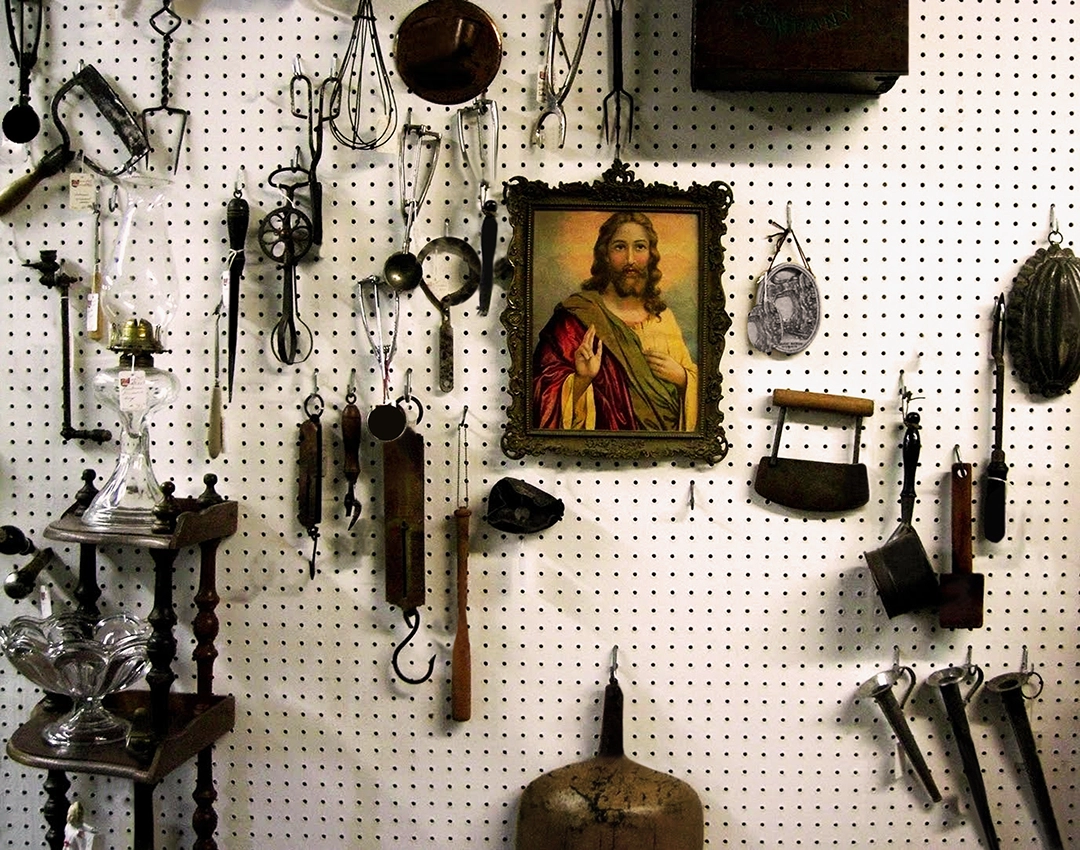
From the Saving my Words series: No. 12. Old Tools for Convenient Uses. Springfield, Ohio.
Photograph printed on Luster Paper | 36 x 48 x 2 in
The images that make up I.T.I.N.E.R.A.T.I.O.N.S capture places that caught the attention of Juan-Sí González during his journeys along the roads of the American Midwest. At first, taking these photographs served an essentially practical purpose: they helped him orient himself within a vast, homogeneous, sprawling territory. With time, however, orientation became observation. González began to recognize how physical environments condition the lives of those who inhabit them and, conversely, how human presence continually modifies, occupies, exhausts, and abandons the spaces through which it passes.
His attention gradually shifted toward places where people were no longer visible but where their presence remained unmistakable. Empty lots, isolated buildings, signs, tools, domestic objects, commercial structures, and fragments of vernacular architecture appeared before his camera like elements left behind on an abandoned stage. They are deserted spaces, but rarely neutral ones. Material culture persists within them as evidence. Someone conceived these objects, needed them, purchased them, used them, placed them there, and eventually left them behind. Human absence thus becomes one of the most persistent forms of human presence in González’s photographs.
This way of looking acquires particular significance within the artist’s own trajectory. Born in Santiago de Cuba and educated at the National School of Art and the Higher Institute of Art in Havana, González emerged within the experimental Cuban art scene of the 1980s. He participated in the first and second Havana Biennales and in 1987 co-founded Grupo Art-De, an artist collective that used street interventions, performance, and underground video to address social and human-rights issues. His practice has never been confined to photography: installation, performance, video, constructed objects, and new media have all served, at different moments, as instruments selected according to the demands of an idea.
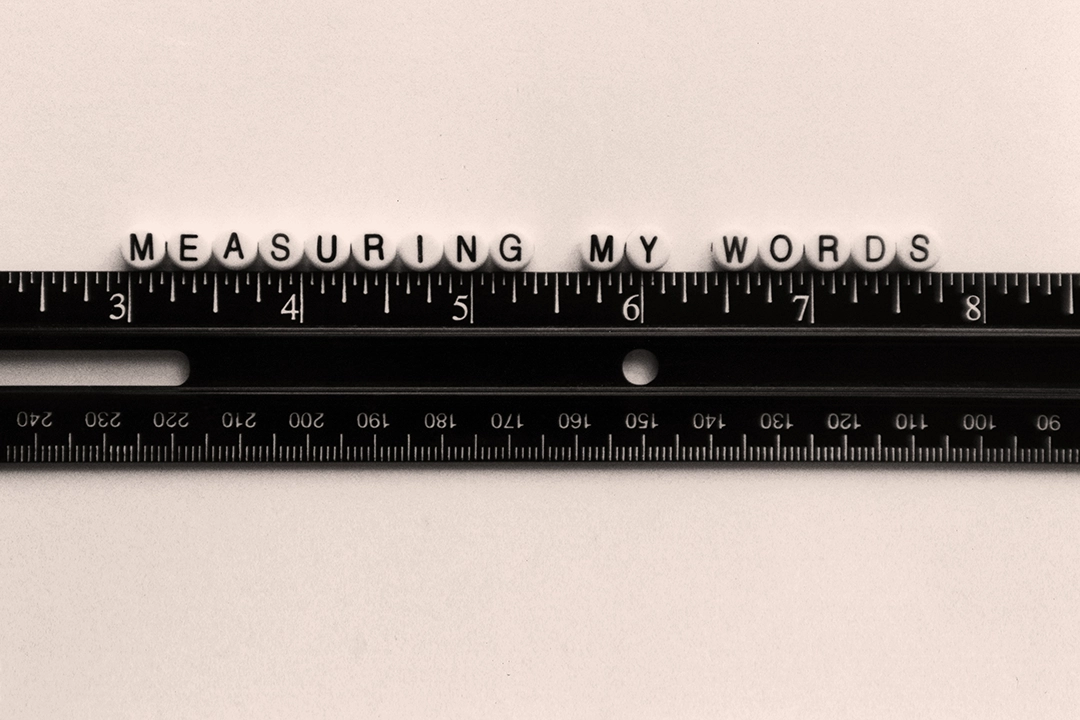
From the Saving my Words series: No. 8. Measuring My Words. Yellow Springs, Ohio. Springfield, Ohio.
Photograph printed on Luster Paper | 16 x 24 x 2 in
González has lived in Ohio since 2003. Seen from that perspective, his sustained observation of the Midwest is not the gaze of a passing traveler. It belongs to someone who has spent more than two decades learning to inhabit an adopted geography while maintaining the perceptual distance necessary to interrogate it. The road becomes both a physical route and a method of knowledge: an extended process of reading a territory whose apparent familiarity can conceal its ideological, historical, and psychological structures.
This concern has appeared repeatedly in González’s work. In Looking for Cuba Inside, developed over many years and presented during the 2024 FotoFocus Biennial at Antioch College’s Herndon Gallery, the artist followed an improbable cartography generated by his discovery of American towns named Cuba. Documentary photographs, maps, archival material, constructed images, video, and travel notes transformed those journeys into an inquiry into exile, memory, displacement, and the possibility of constructing a psychological territory within an adopted country. I.T.I.N.E.R.A.T.I.O.N.S emerges from a related experience of movement, but its field of vision widens. The emphasis is no longer on finding Cuba inside the United States, but on reading the United States through the traces it leaves upon its own landscape.
In these images, González approaches the American Midwest as an accumulation of signs. Buildings and objects illustrate ways of thinking, producing, consuming, believing, working, and inhabiting that have sedimented over time. Their meanings frequently survive the purposes for which they were originally created. Once displaced from ordinary use—or isolated through the photographic frame—they acquire a certain strangeness. The commonplace begins to appear improbable; what seemed natural reveals itself as constructed.
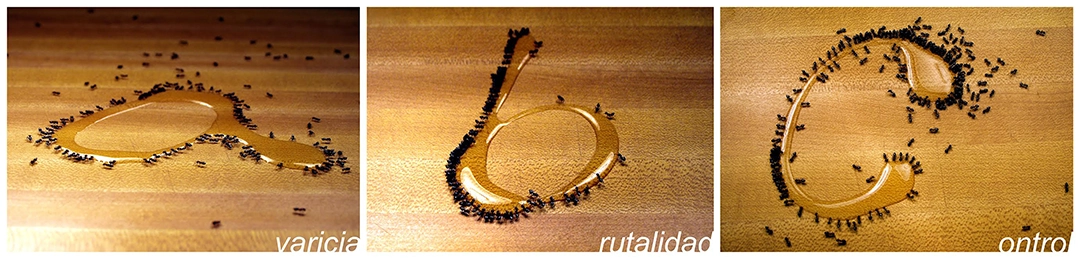
From the Saving my Words series: No. 2. A.B.C. (ambition / brutality / control). Yellow Springs, Ohio. Springfield, Ohio.
Photograph printed on Luster Paper | 36 x 65 x 2 in
It is precisely here that González investigates the unstable boundary between documentary and fiction. Photography traditionally arrives carrying the promise that what appears before us existed before the camera. González does not deny that documentary condition. He exploits it. Reality itself supplies the improbable combinations, accidental arrangements, abandoned scenarios, and visual contradictions that his photographs isolate. The camera does not need to invent an absurd world; it needs only to recognize the absurdities already embedded within the visible one.
The resulting images operate as what González has called mental landscapes: reinterpreted topographies in which physical space becomes inseparable from memory, ideology, expectation, and imagination. The Midwest appearing in I.T.I.N.E.R.A.T.I.O.N.S is therefore simultaneously geographical and psychological. What is photographed is a place; what the photograph asks us to examine is the system of meanings accumulated within it.
This makes González’s exhibition particularly resonant within the framework of the 2026 FotoFocus Biennial, The Long View. The eighth edition of the Biennial considers time and perspective in photography and film, and the ways lens-based media shape our understanding of the world. Since its launch in 2012, FotoFocus has grown into the largest photography biennial of its kind in America, bringing museums, galleries, universities, artists, curators, and alternative spaces into a regional network that has presented more than 800 exhibitions and programs and welcomed more than one million visitors. The 2026 edition encompasses 74 exhibitions across 65 venues in Greater Cincinnati, Dayton, Columbus, and Northern Kentucky.
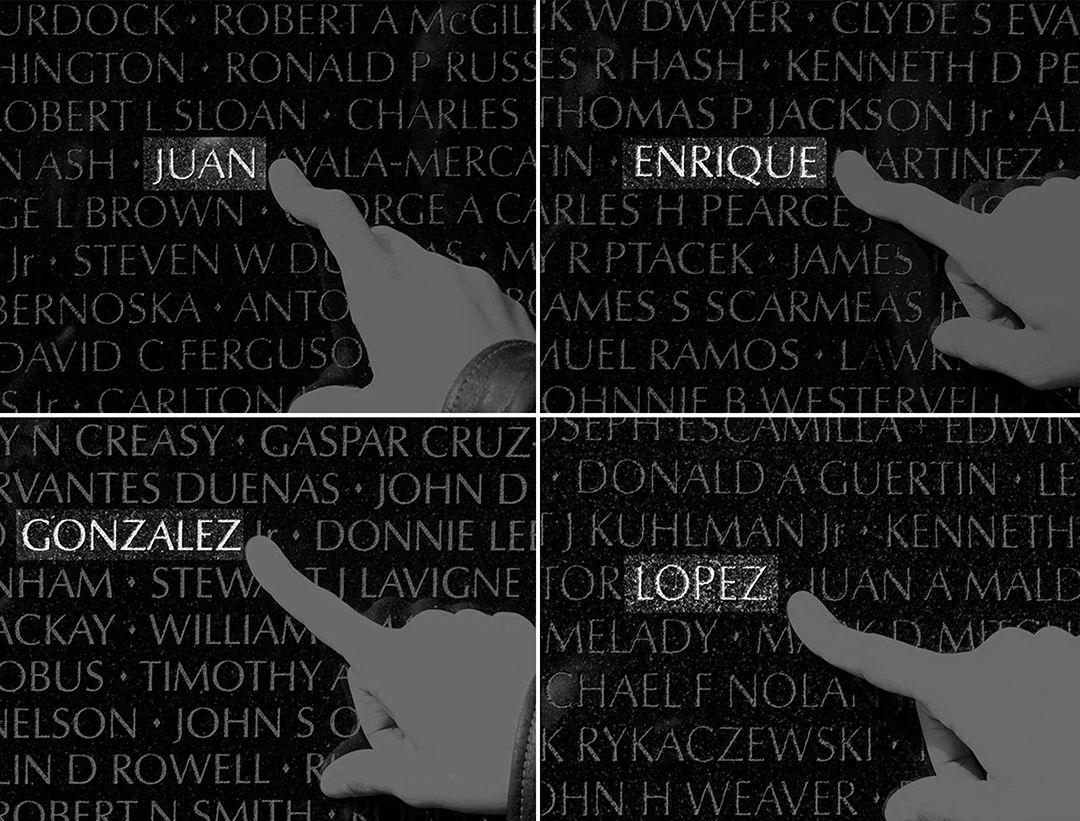
From the Saving my Words series: No. 4. Rest in Peace. Washington D.C
Photograph printed on Luster Paper | 32 x 48 x 12 in
Four photographs comprise my full name and framed text. They were taken at the Vietnam Memorial in Washington DC. The 4 components of my name were extracted from the 58, 249 names of American soldiers who lost their lives in the war.
Within that expansive structure, I.T.I.N.E.R.A.T.I.O.N.S proposes its own form of the long view. González observes environments not as isolated moments but as surfaces upon which time has accumulated. What people build, modify, use, neglect, and abandon becomes a record of successive occupations of space. His photographs ask us to look beyond the immediate appearance of things and recognize the histories, assumptions, desires, and failures embedded within the ordinary landscape.
The exhibition also continues The Annex Gallery’s sustained participation in FotoFocus. The gallery served as a Biennial venue in 2022 with Raul Cañibano: Cuba Real and ALL FALLS DOWN: Architectural Heritage Effaced—The Universal Tale of Two Cities, 2 Countries, and again in 2024 with Through A Stranger’s Eyes and Willy Castellanos: Exodus, Alternate Documents (1994–2024). Its return for the 2026 edition reflects a continuing commitment to photography as an instrument for examining place, memory, migration, identity, and the social realities encoded in the visible world.
With I.T.I.N.E.R.A.T.I.O.N.S, that commitment turns toward the landscape immediately surrounding us. González makes the familiar strange enough to be seen again. His photographs recover seemingly insignificant places from visual indifference and return them to us as evidence: fragments of a shared territory in which physical structures and human histories remain inseparable, even after the people themselves have disappeared from view.




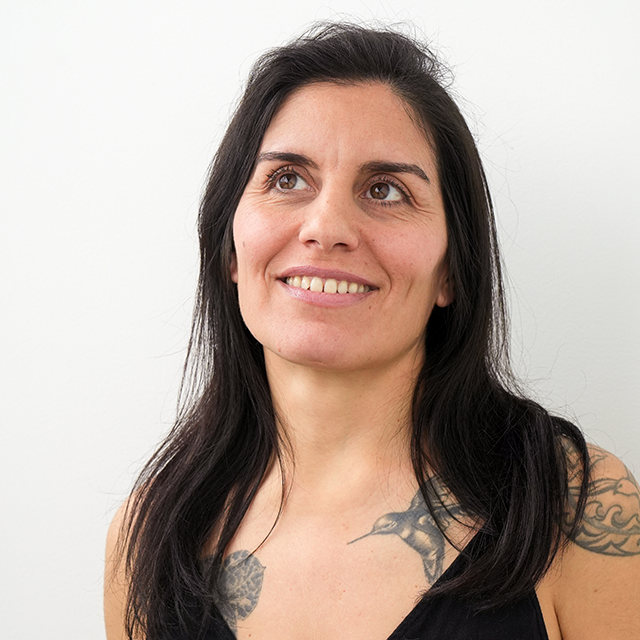
In the Middle of the Endless Water, a solo exhibition by Julia Orquera Bianco curated by Carolina Cuervo at the Philip M. Meyers Jr. Memorial Gallery at the University of Cincinnati, brings together more than a decade of work by an artist whose practice has gradually moved from the personal experience of migration toward an inquiry into territory, memory, ecology, and alternative forms of knowledge.
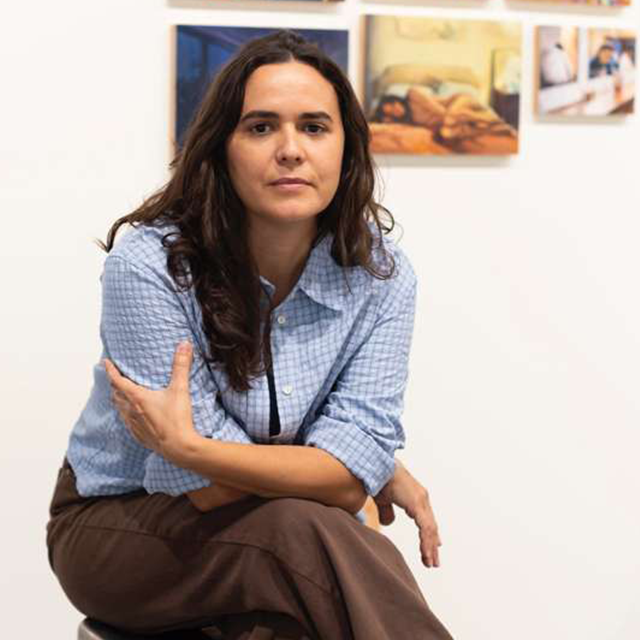
Evelyn Sosa and Leticia Sánchez Honored for Their Artistic Contributions
.svg)