1310 PENDLETON STREET CINCINNATI, OH
| (513) 407-7077 | WED - SAT 11:30 AM - 4:00 PM

THE
ANNEX
NEWS

The Political Body: Form in the Work of Kina Matahari
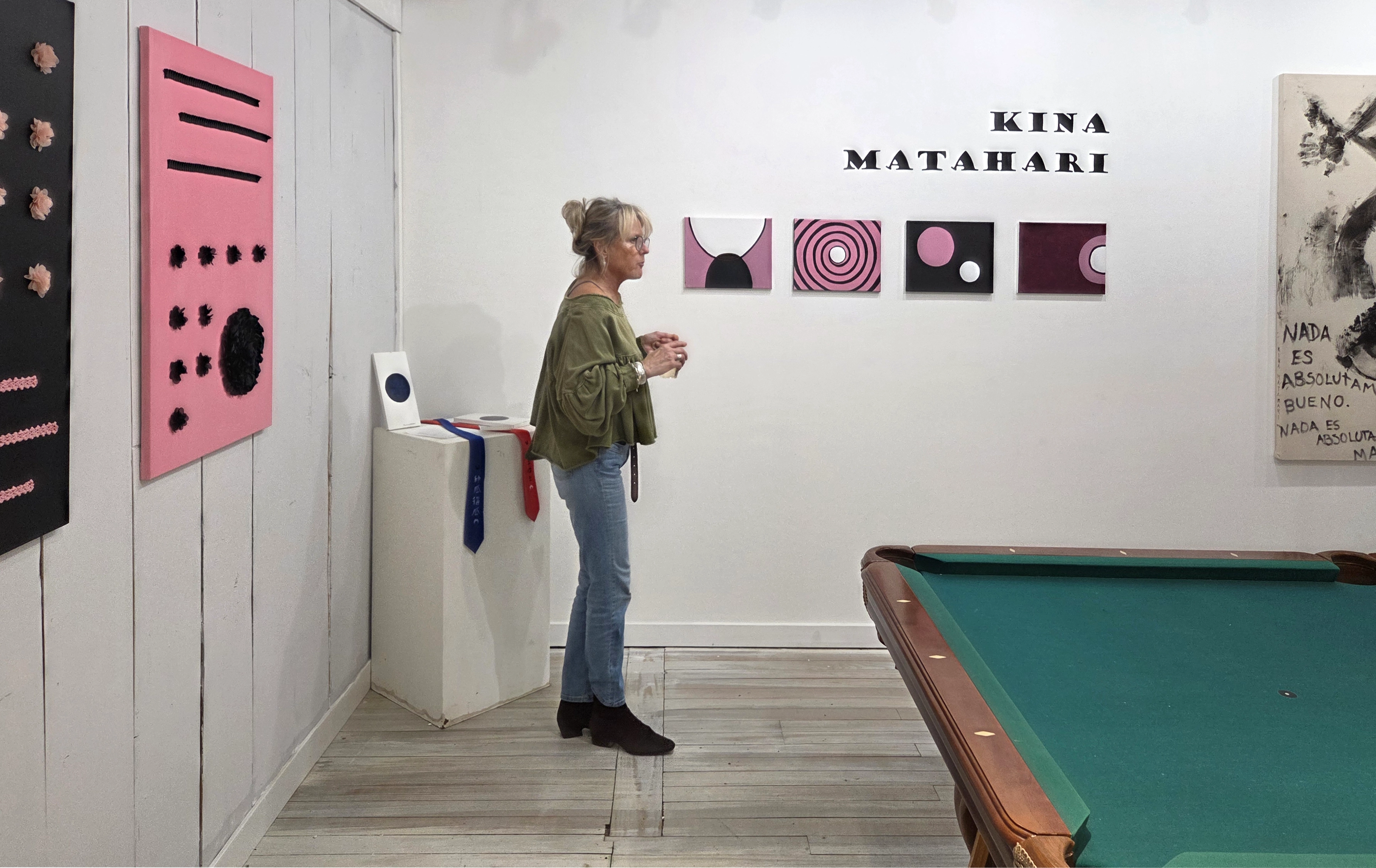
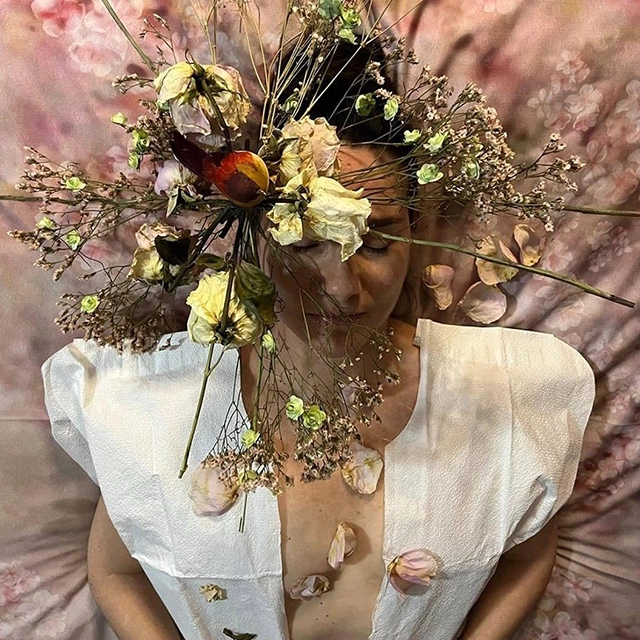
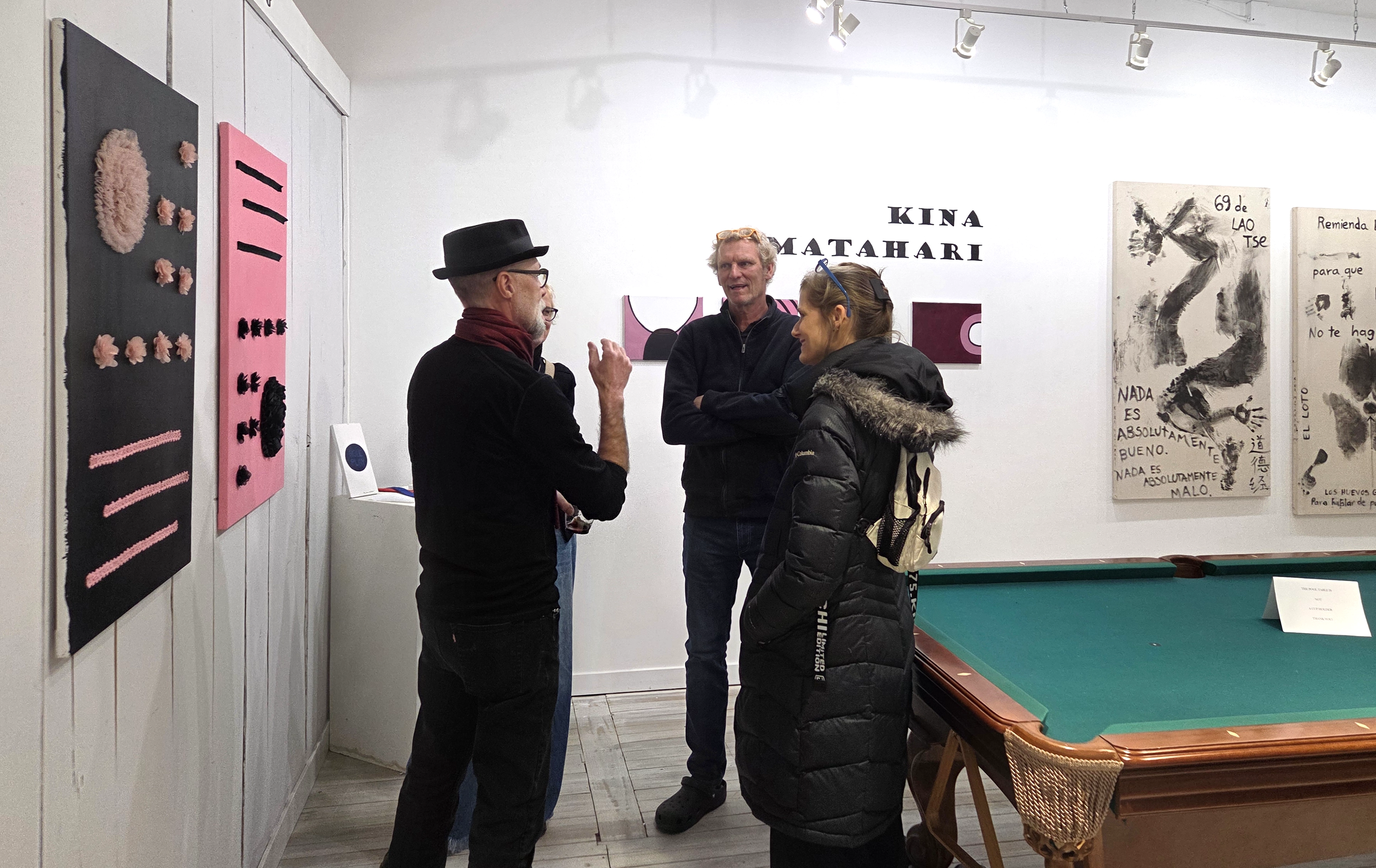
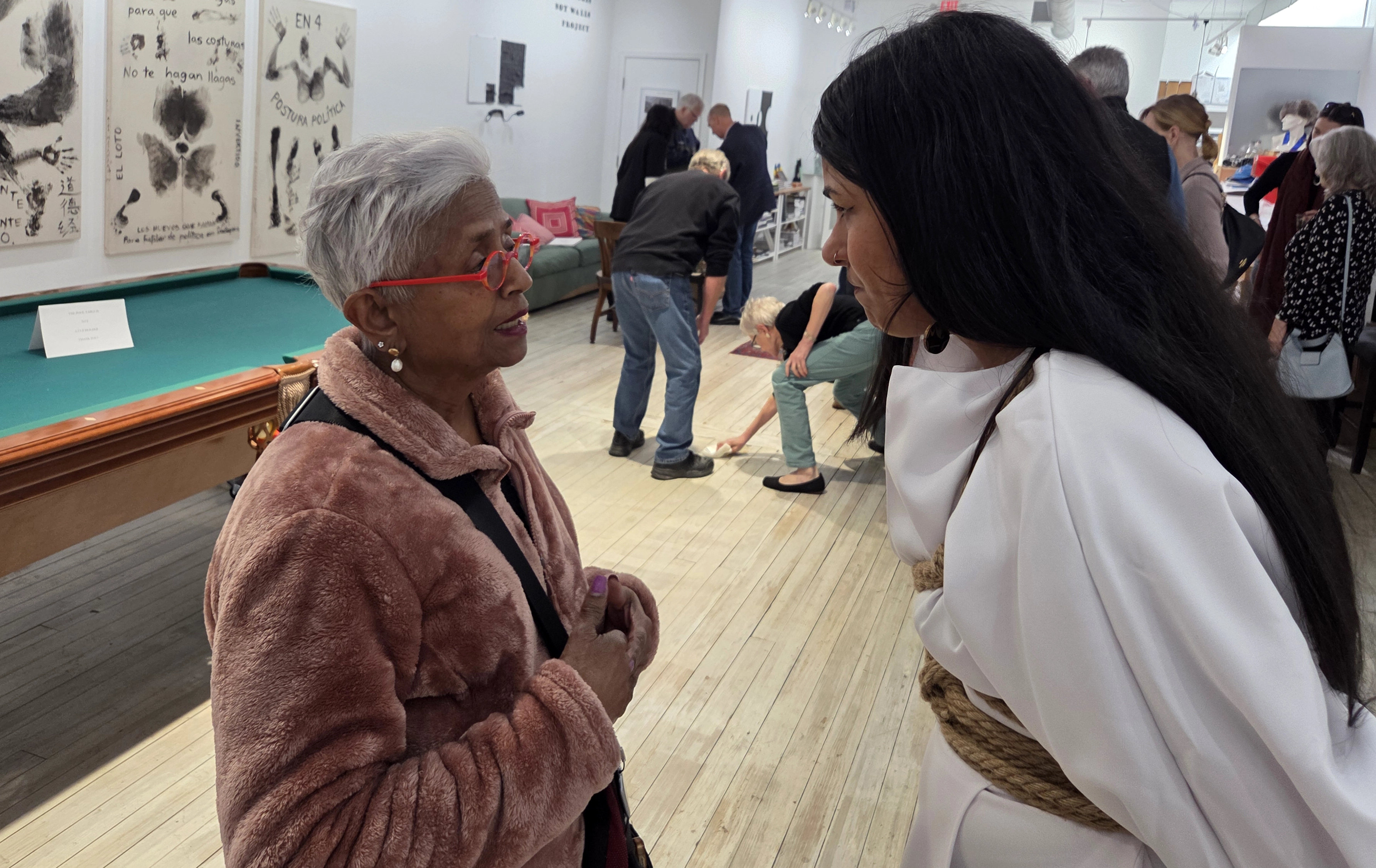
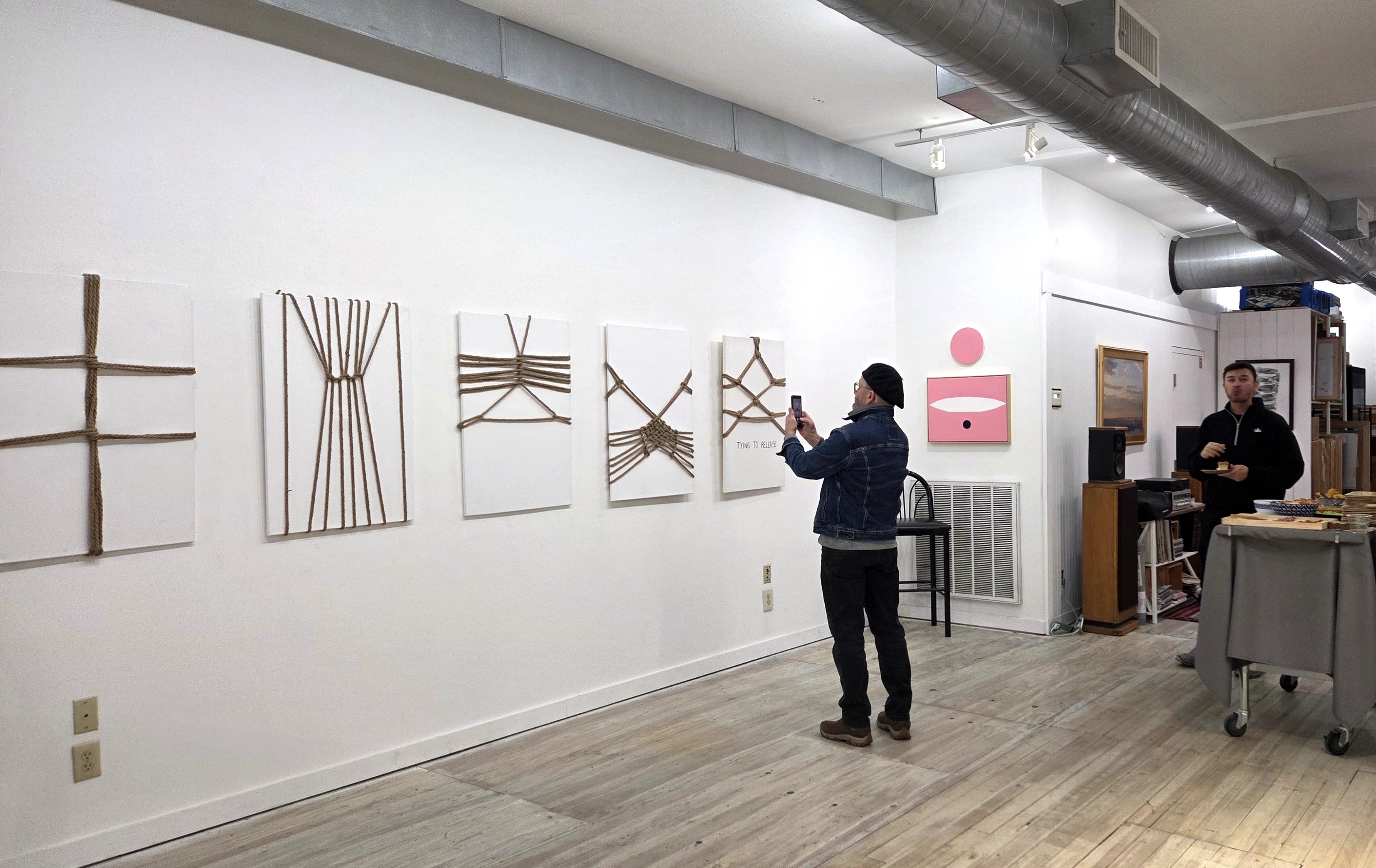
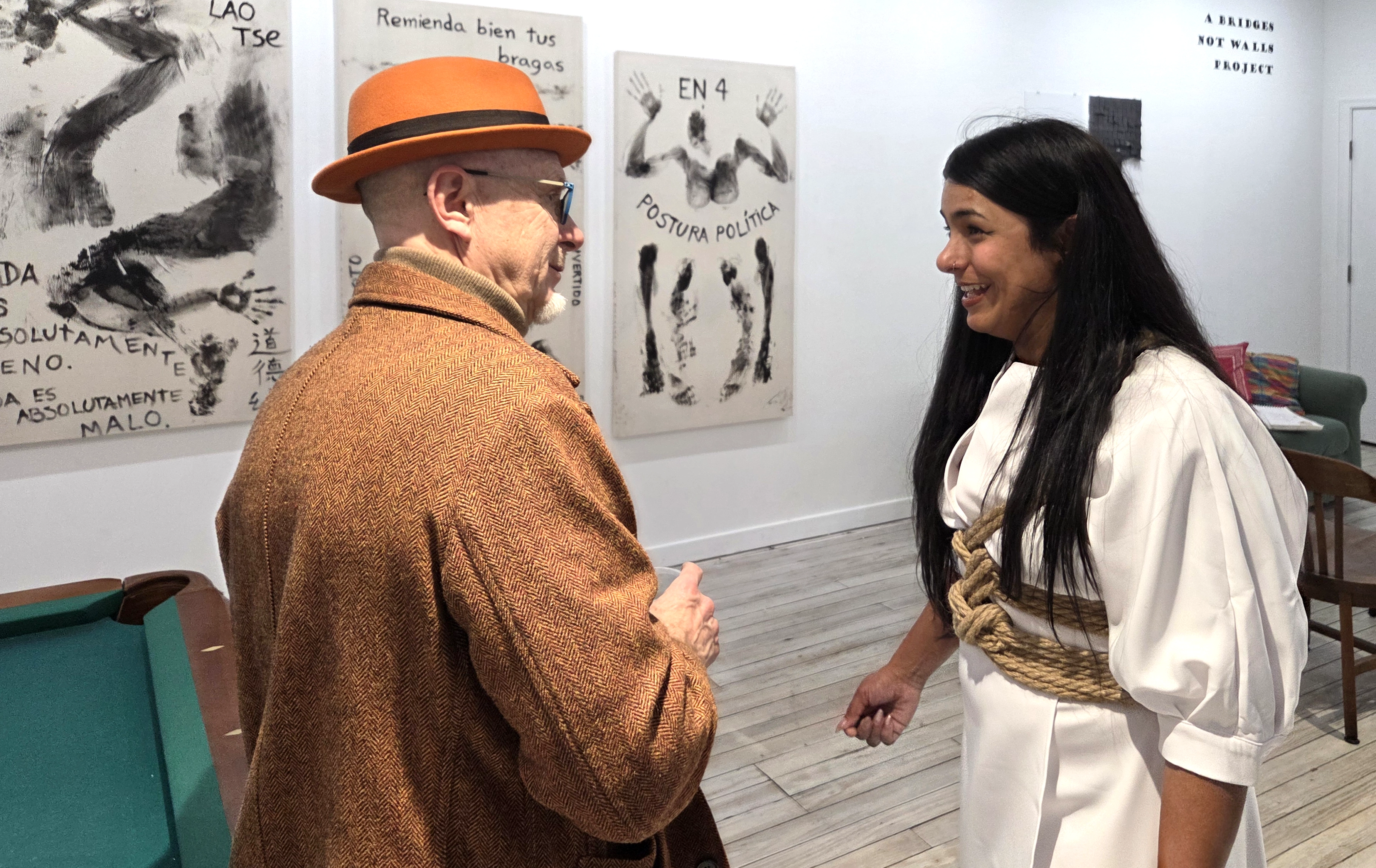
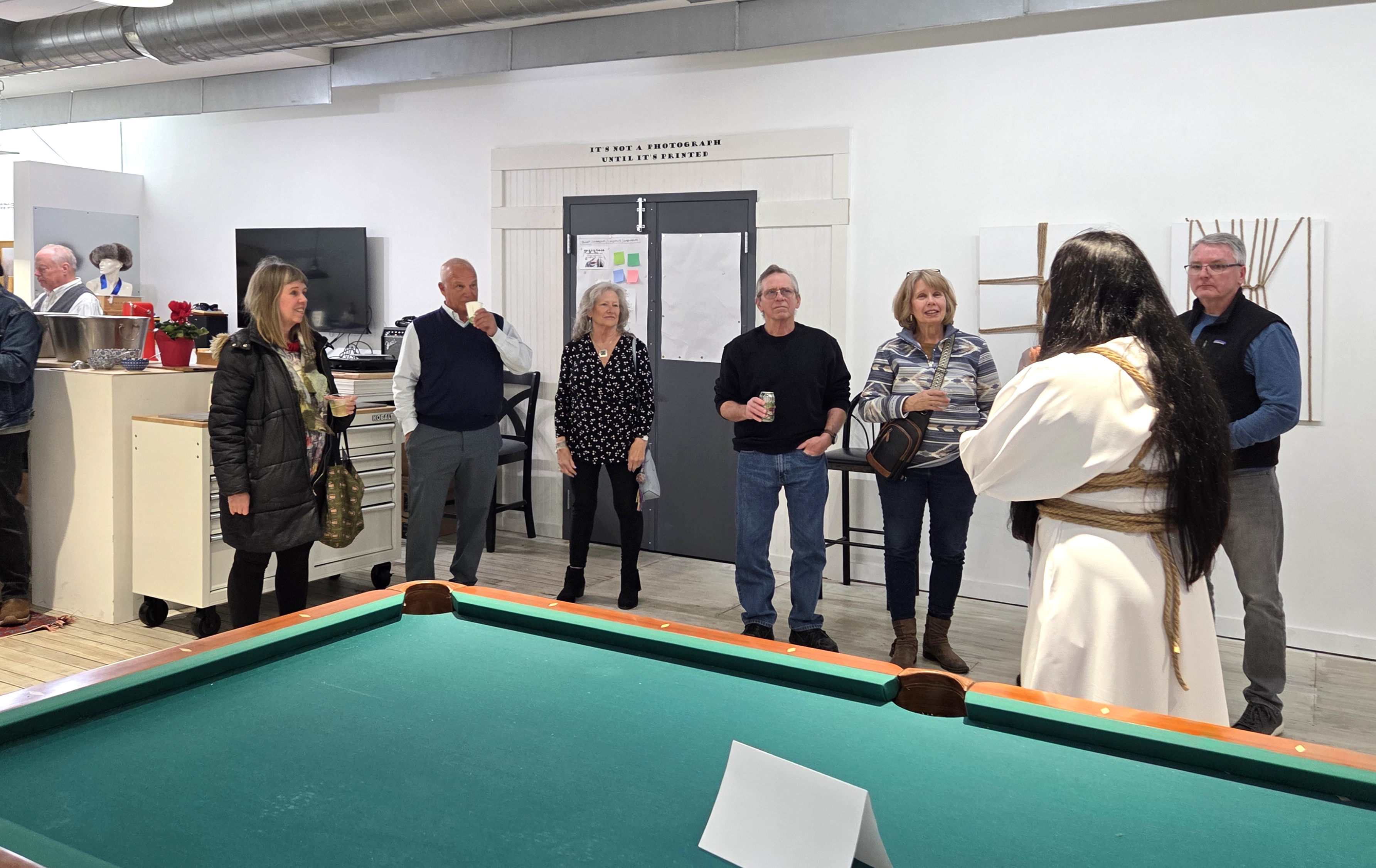
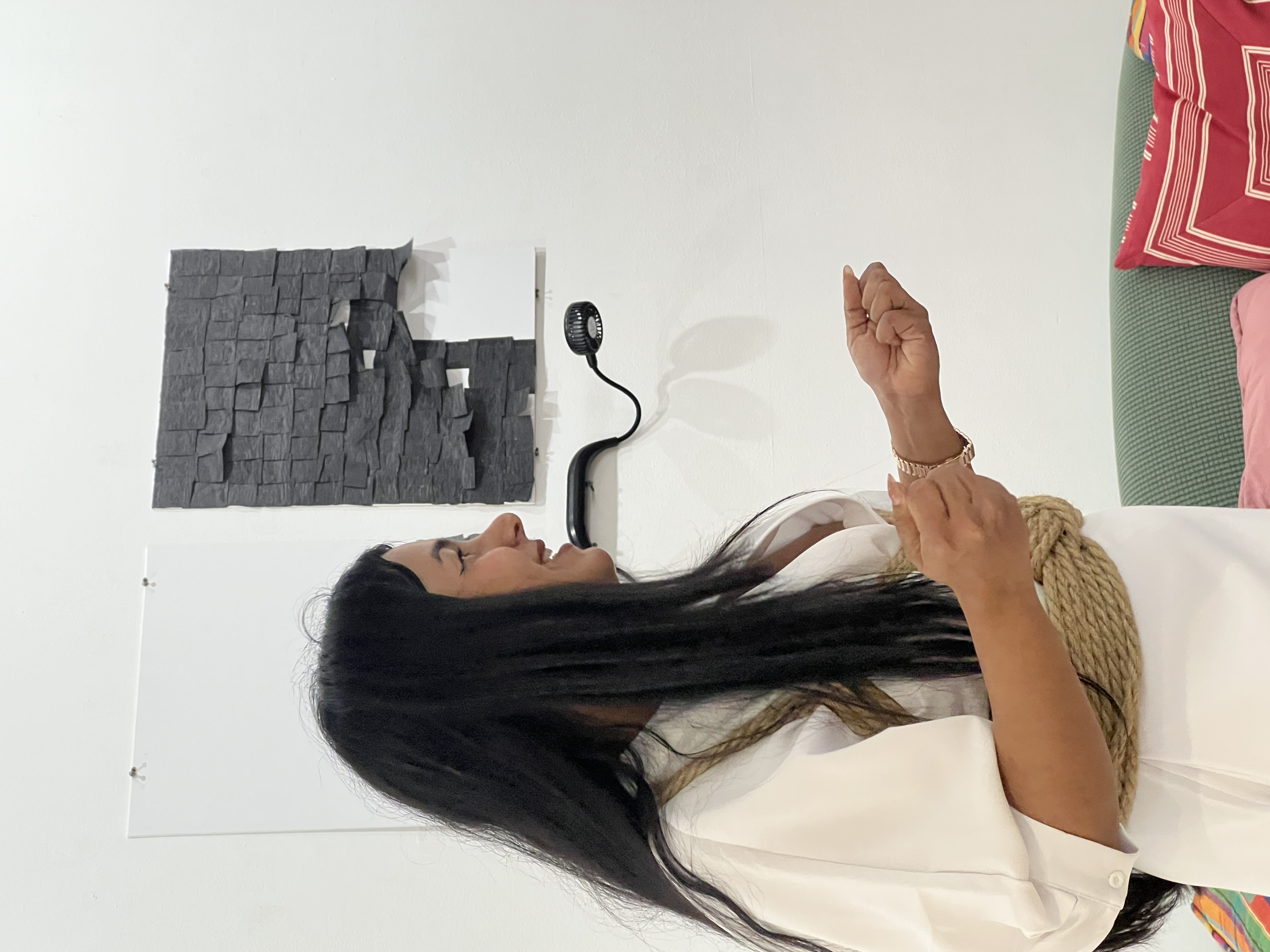
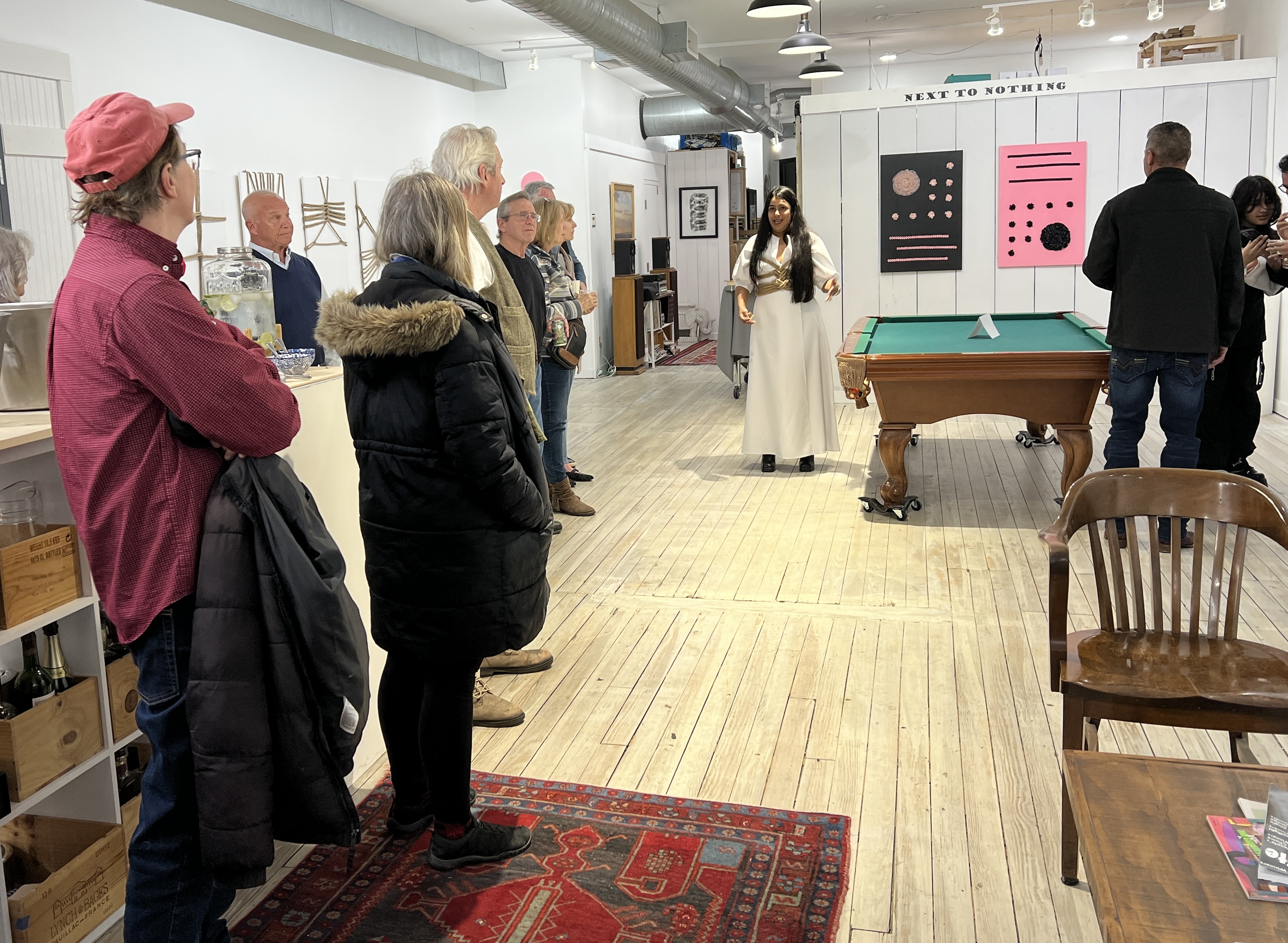
Claudia Ricardo’s exhibition, Next to Nothing—recognized within the Cuban art circuit as Kina Matahari—has concluded its run at The Annex Gallery. Now that the works have been dismantled, we are granted the opportunity to analyze what occurred, moving beyond the curatorial framework’s initial intent. The title was a premonition of a paradox. It revealed how a state of 'next to nothing' can encapsulate the profound tensions the artist endured in her native Cuba, alongside the uncertainties of her abrupt territorial de-inscription and the resulting erosion of belonging. This is an exile in every sense, resurrected for the audience through her own visceral testimony.
There was no expectation for Kina to deliver decorative objects from Kentucky. Her recent output is anchored in raw, unyielding premises. It explores opposites that coexist and the realities forged in their inevitable collisions. We are forced to accept that these contradictions are inherent to our nature.
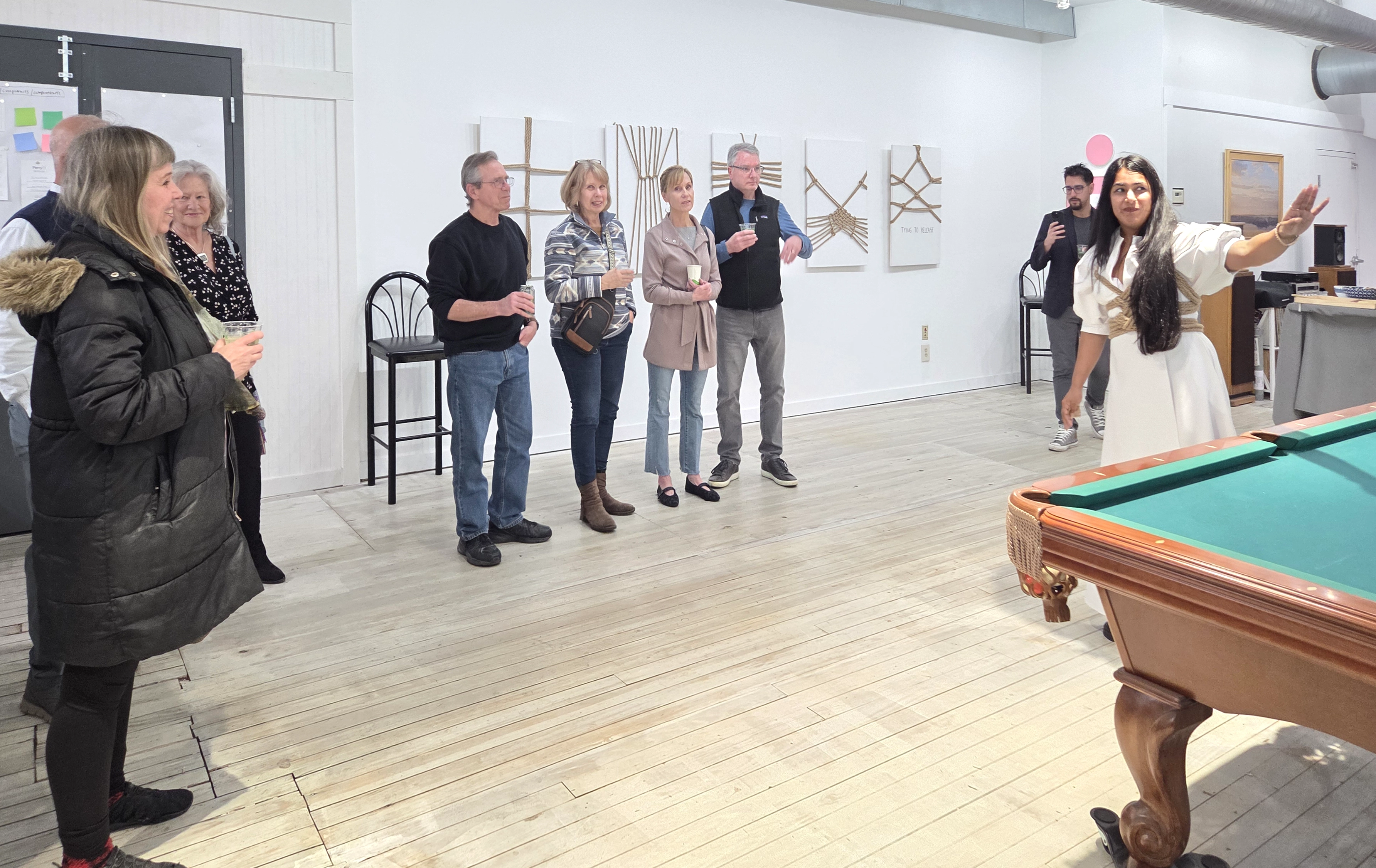
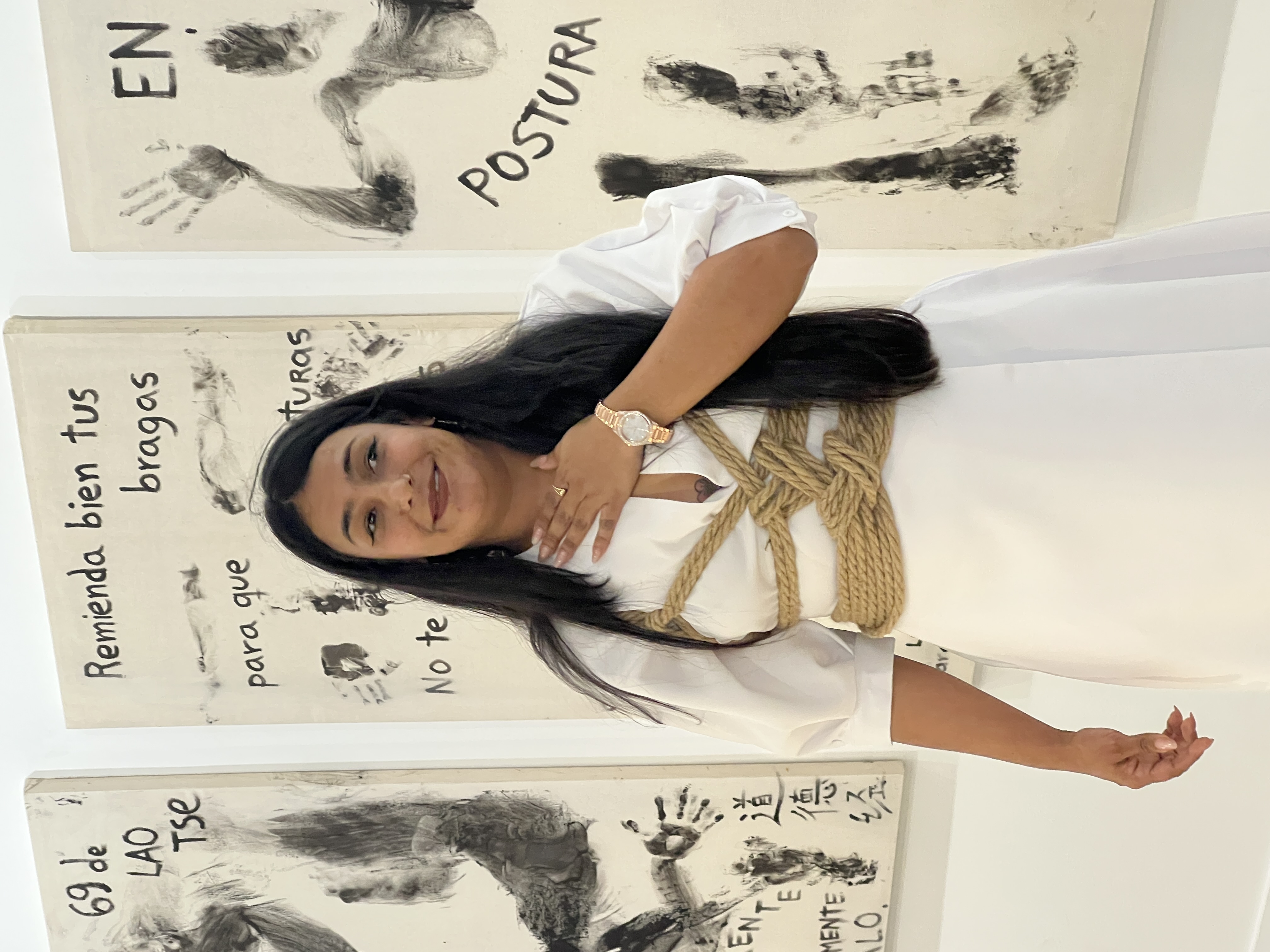
A cynical observer might suggest that the resolution to such friction lies in a space where opposing forces negate one another. What we witnessed instead was how each piece maintained itself at the point of maximum tension, enduring the struggle between what could and could not be uttered. The work occupies an almost hostile terrain, exposing the mechanisms of command and obedience. Kina hails from a place where ideology is preoccupied with the constant reaffirmation of authority, often through blunt force. Her art, defined by physical, moral, and emotional coordinates, stands as a reflection and a scar—the material residue of her confrontations.
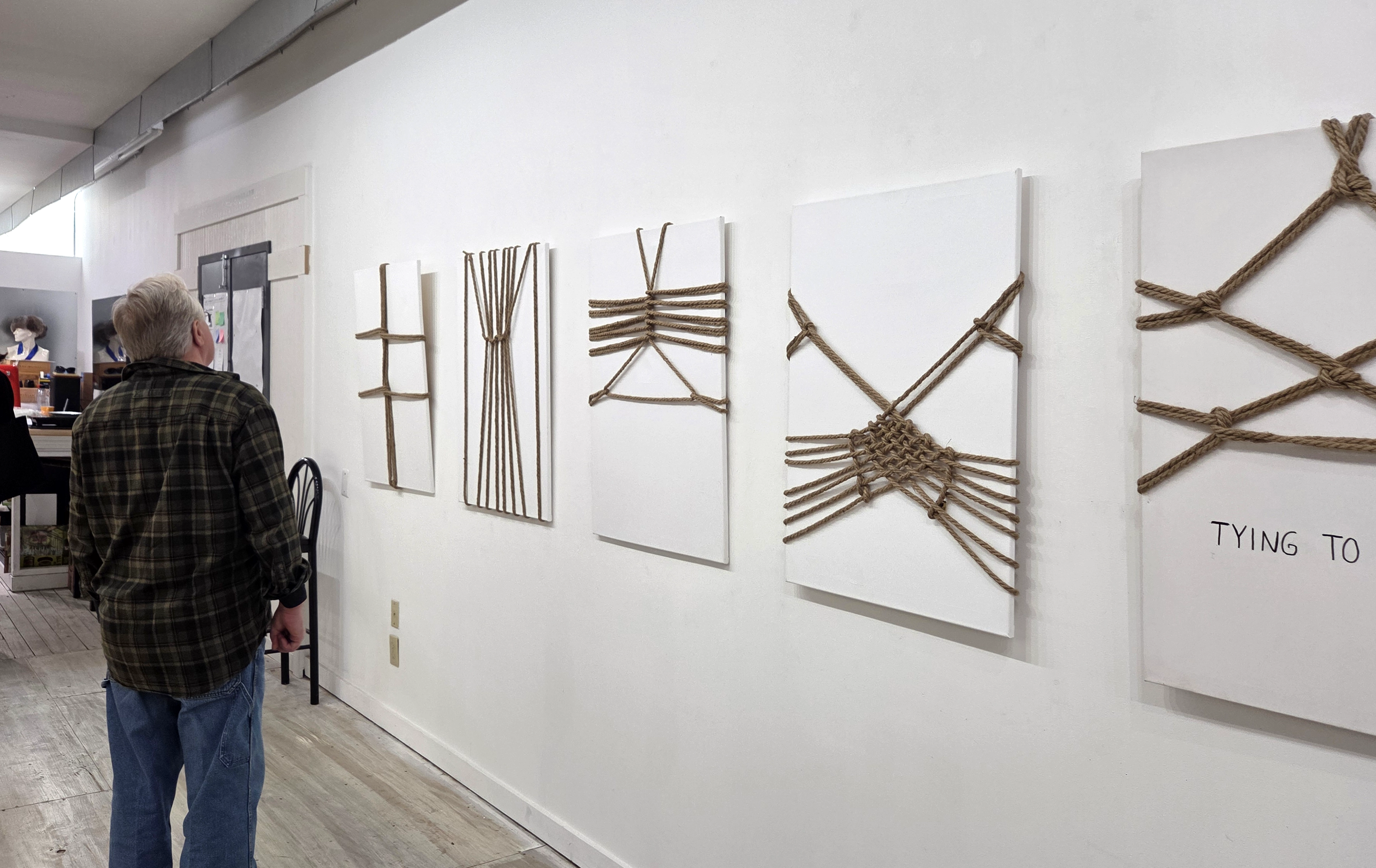
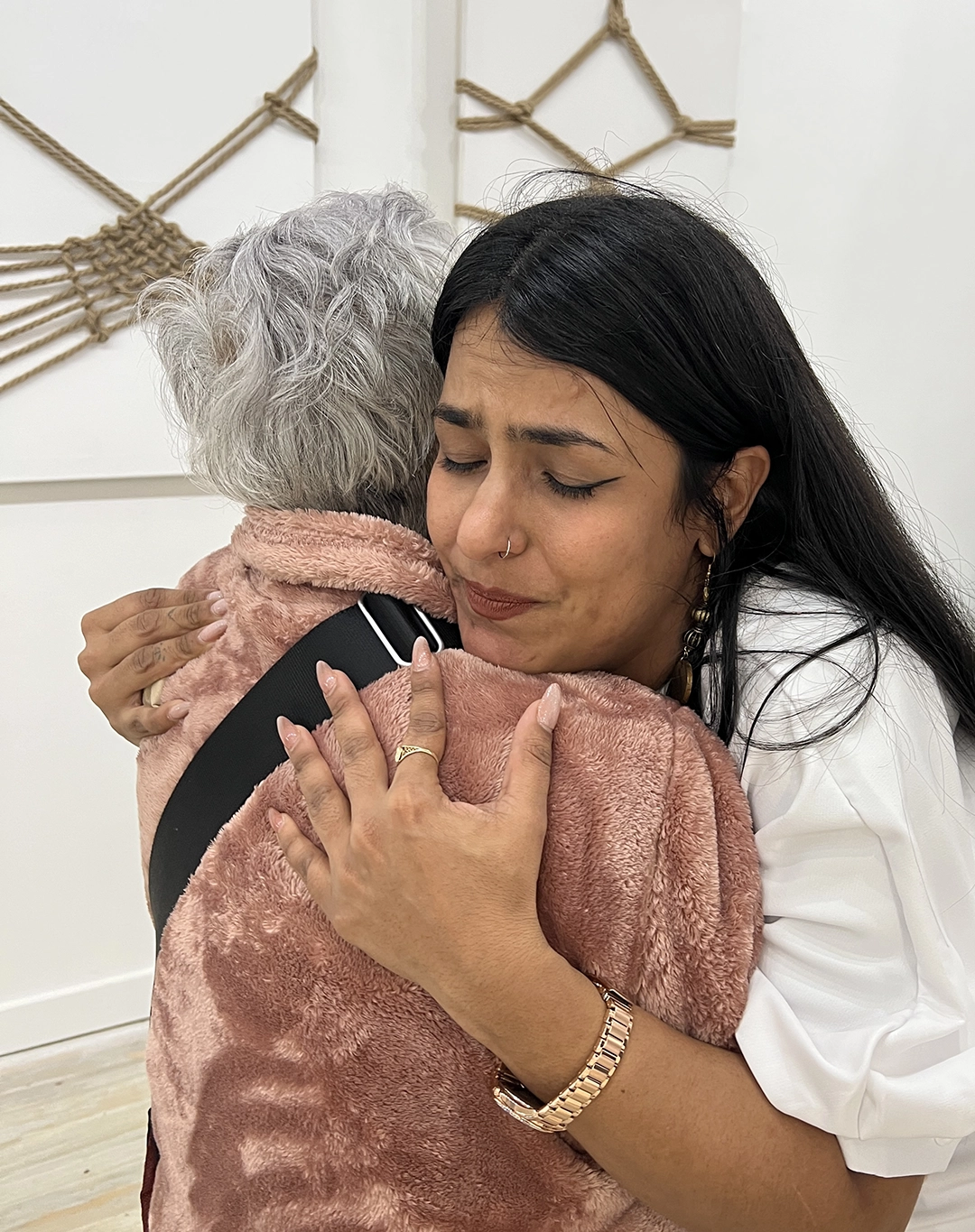
The body functions as the most immediate vessel of her narrative. By employing her own figure as a primary tool on the canvas, Matahari erases the distance between the artist and the work. She presents the body as a political register. This is a body that speaks of the ways power, the State, and social mandates shape and, at times, suffocate us. The use of shibari knots is particularly significant. These are stripped of their erotic context to serve as a physical representation of immobility and censorship. They suggest that to understand the nature of liberty, one must first recognize the knots that restrict it.
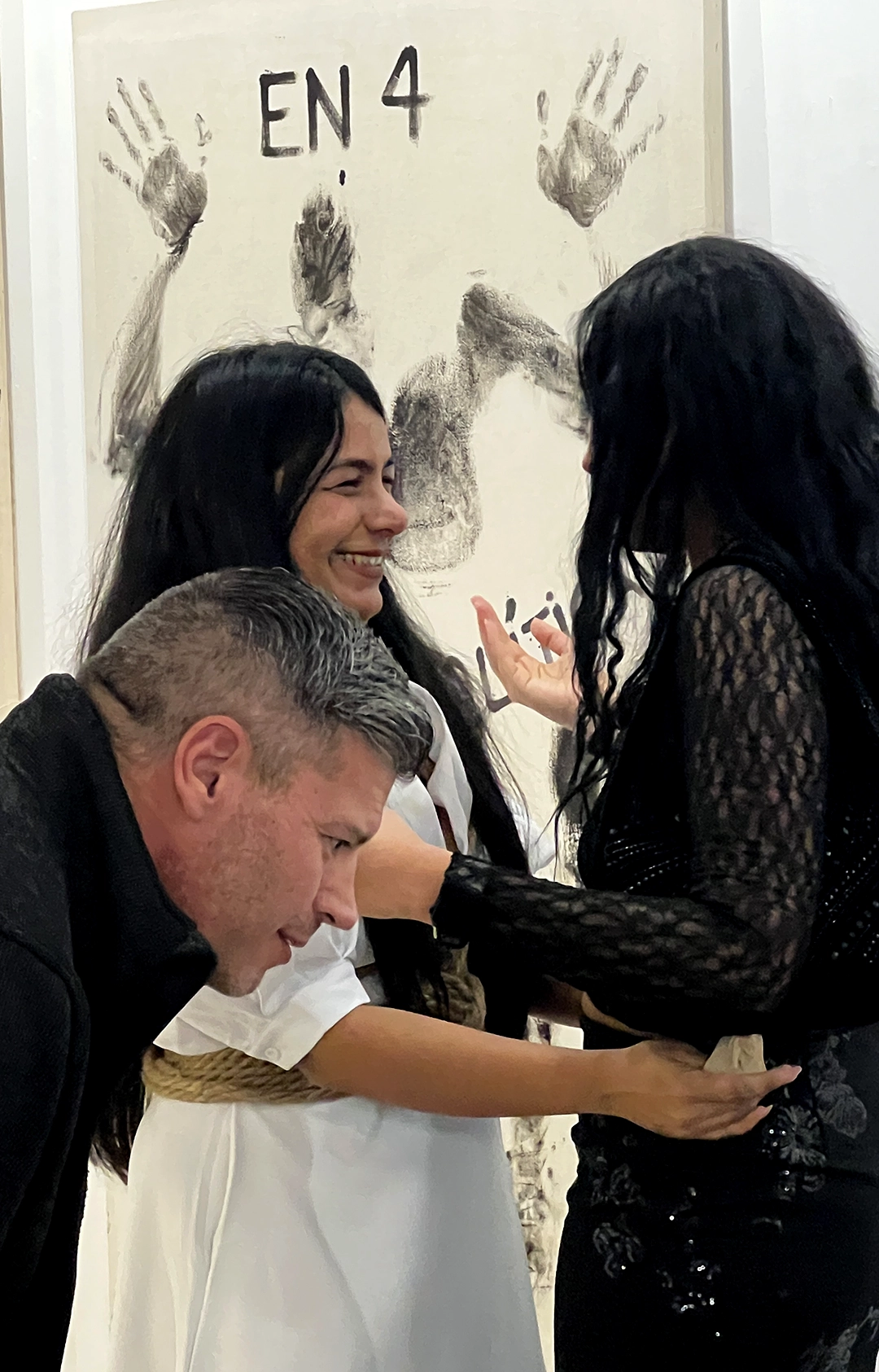
Space was also reserved for personal memory. The presence of symbols like the tinajón bridged her Cuban history with her current exile. The aura of emptiness or silence that permeated the gallery was the resonance of an identity under construction, reconfigured through the lenses of resistance and absence.
In the end, this exhibition leaves us with a dialogue on coherence. It demonstrated that it is possible to be radical and subtle in the same breath, and that truth does not reside in a single camp. It exists within the conflict itself. Next to Nothing has ended, yet the invitation to look our own contradictions in the face remains in the digital archive, the catalog, and the memory.

.jpg)



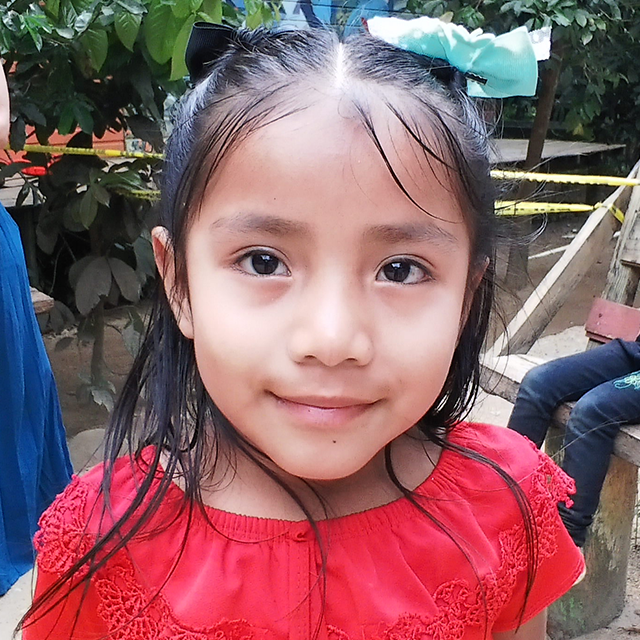
On Saturday, September 12th, The Annex Gallery brought together some forty people for an evening of celebration and fundraising dedicated to advancing the education of children living in some of the world's poorest communities. Jens G. Rosenkrantz and Kay Hurley, mother of Katie Hurley Wales, opened the gallery to host a benefit for Brighter Children, the organization led by Katie, under the...
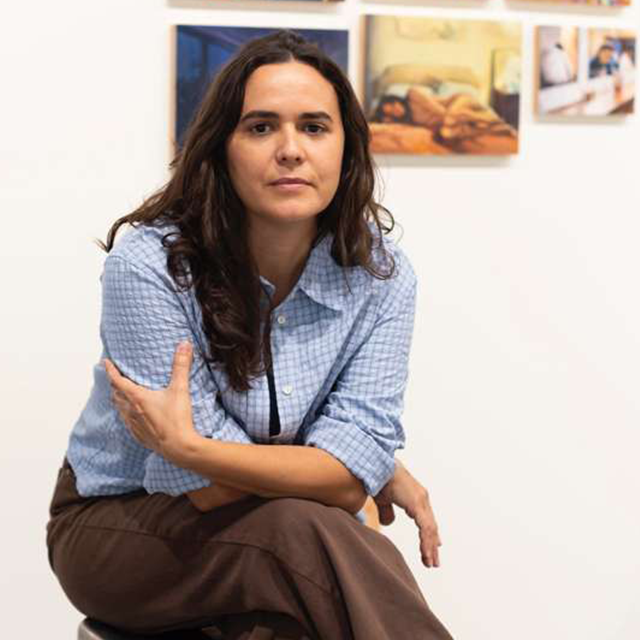
Evelyn Sosa and Leticia Sánchez Honored for Their Artistic Contributions
.svg)