1310 PENDLETON STREET CINCINNATI, OH
| (513) 407-7077 | WED - SAT 11:30 AM - 4:00 PM

THE
ANNEX
NEWS

The Sound of Trust

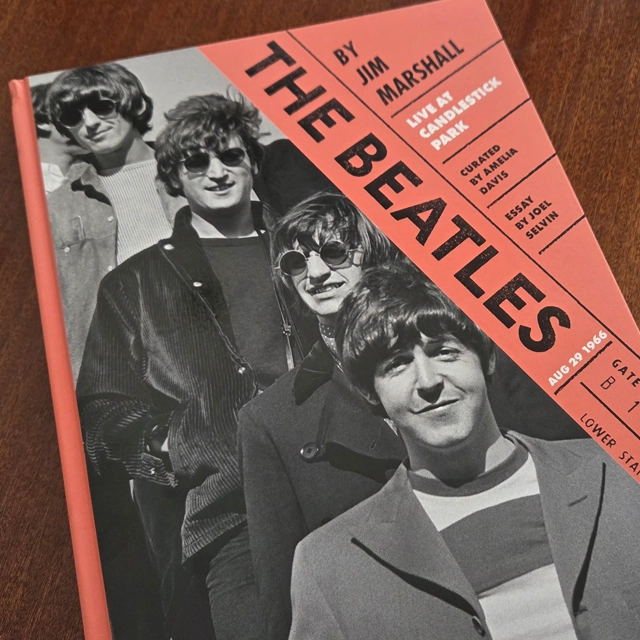
During the extraordinary rise of popular culture and counterculture in the Sixties, Jim Marshall seemed to be everywhere that mattered.
Called the most celebrated and prolific photographer of the 20th century, Marshall is widely known for his iconic music photography. Because Jim lived life alongside his subjects and never betrayed their trust, he was granted second-to-none access. His images of the Monterey Pop Festival, which chronicled the breakout performances of Jimi Hendrix, Janis Joplin, and Otis Redding, were woven into the lore of the era. Marshall also photographed unguarded moments of his subjects, such as Janis Joplin lounging backstage with a bottle of Southern Comfort and Brian Jones and Jimi Hendrix strolling the Monterey Pop Festival fairgrounds. Johnny Cash's groundbreaking concerts for prison reform at Folsom Prison and San Quentin Prison were captured in the lens of Marshall's camera. In a career that ended with his untimely death in 2010, Marshall shot more than 500 album covers; his photographs are in private and museum collections around the world.

Marshall saw himself as an anthropologist and a journalist, visually recording the changing times and explosion of creativity and celebrity of the '60s and '70s. He immersed himself in that world more than any other photographer and, in doing so, emerged an icon for a new generation of music, art, and photography lovers. His images employed a minimum of artifice to document people and events. Not interested in conventional beauty or technical perfection, Marshall sought to capture character: the simple truth of whom a person is. His photo essays on civil rights and political unrest are a testament to his concern for the human condition.
As a freelance photographer in the early 1960s Jim Marshall knew he had not only to get the best shot but also had to pitch compelling stories to the major magazines Look, Life, The Saturday Evening Post. His first was to The Saturday Evening Post on poverty in America. Jim embedded himself in Hazard Kentucky during the winter of 1963.
By living with the coal mining families Jim understood how hard their lives were and wanted to capture and document the human condition. The Saturday Evening Post's writer did not feel the same way. Because of the derogatory writing Jim pulled his photos and gave the story to Jubilee Magazine (published by the NY Archdiocese). The derogatory writing prompted Jim to pull his photos and give the story to Jubilee Magazine (published by the New York Archdiocese). From hereon, he became more selective on who would publish his deeply empathetic and compassionate photographs.

In the summer of 1963 Jim Marshall was at the Newport Folk Festival. Joan Baez told Jim that she was helping with the organizing of the March on Washington. She was conducting a trial run through Newport, RI, with James Forman, Director of the Student Non-Violent Coordinating Committee (SNCC) and Cordell Reagon of the SNCC Freedom Singers. Jim decided to forgo some of the Festival to document the march that ended with a rally at Touro Park. Jim came for the music but knew this small event would be a turning point for the civil rights movement and photographed it.
Jim not only photographed SNCC Chariman John Lewis, organizer for the March on Washington Bayard Rustin, and Andrew Young of the Southern Christian Leadership Council (SCLC), but also the volunteers doing the work.
In July 1964 Jim Marshall attended the Newport Folk Festival where Bob Dylan & Len Chandler performed protest songs in support of Freedom Summer and the 3 missing voter registration volunteers James Chaney, Andrew Goodman y Mickey Schwerner.
Jim Marshall Photography LLC was established with the primary goal to preserve and protect Marshall's extraordinary legacy as a discerning photojournalist and a pioneer of rock-and-roll photography. The estate is continuing the legacy of Jim Marshall through sales and licensing, exhibitions, publishing, and the development of a comprehensive catalog as a reference for the totality of his life's work.
Editor’s Note
This text is based entirely on information generously provided by Amelia Davis.
Amelia Davis is the sole owner, manager, and beneficiary of legendary rock-and-roll photographer Jim Marshall's estate. After meeting him in 1998, Davis served as his trusted assistant for the last 13 years of his life.
Before his death, Marshall entrusted Davis with his entire photographic archive, which consists of over a million negatives. Since his passing in 2010, Davis has curated numerous exhibitions, edited multiple books of his work and was the driving force behind Marshall receiving a posthumous Trustees Award from the Recording Academy in 2014, making him the only photographer to be presented with an honorary Grammy.
The photographs (except the proof sheets) in the show will be for sale as a Limited Edition Estate Prints Edition of 25. The photograph is printed on 20 x 24 inch Canson Infinity Baryta Photographique ll paper by master printer Garnell Boyd of Dickerman Prints in San Francisco. Each print is numbered and bears the authorizing stamp of Jim Marshall Photography LLC on the back.
The prints can be purchased through The Annex Gallery. The prints start at $1,800.00 plus $40 shipping and handling. Please allow three weeks after payment for delivery.




Given its scale and significance, I will present my analysis of this project in several installments. These are the ten design proposals shortlisted for the next series of euro banknotes. At this moment, they are under the gaze of millions. Citizens of the euro area have been invited to choose their favorites in a survey that will remain open until September 21...
2026 FotoFocus Biennial

2026 Members’ Exhibition
.svg)
