1310 PENDLETON STREET CINCINNATI, OH
| (513) 407-7077 | WED - SAT 11:30 AM - 4:00 PM

THE
ANNEX
NEWS

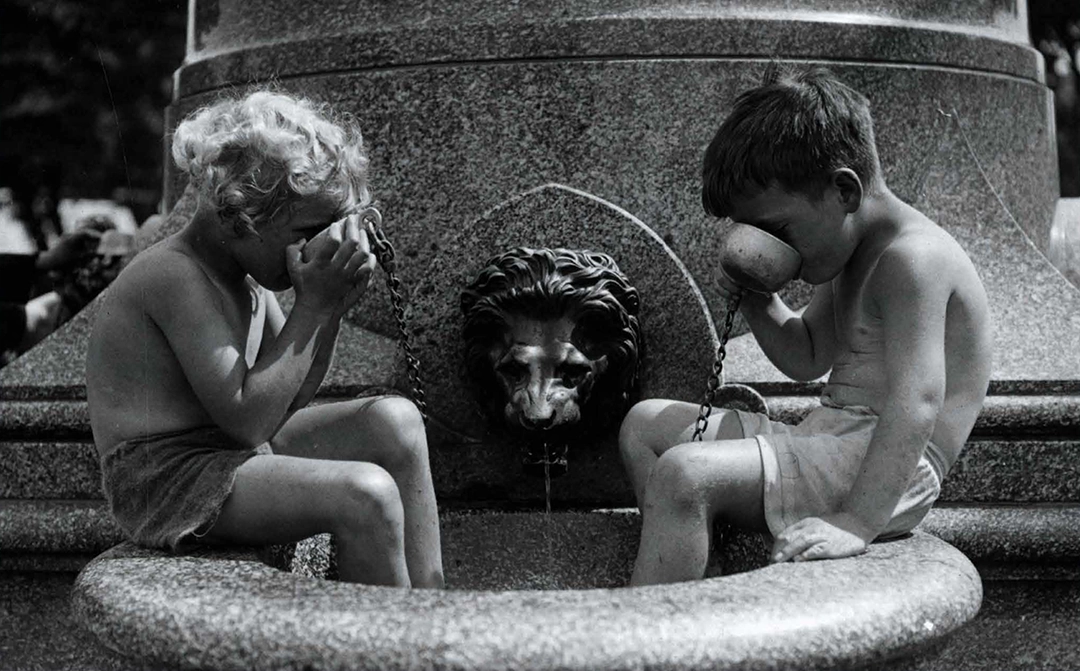
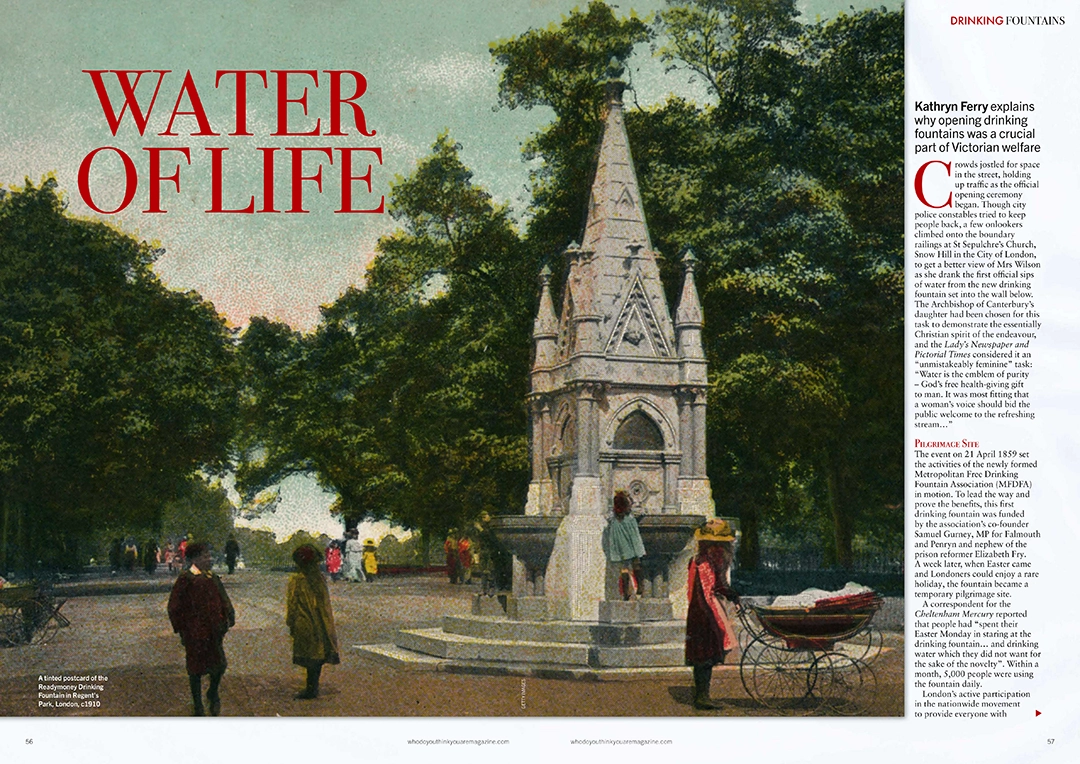
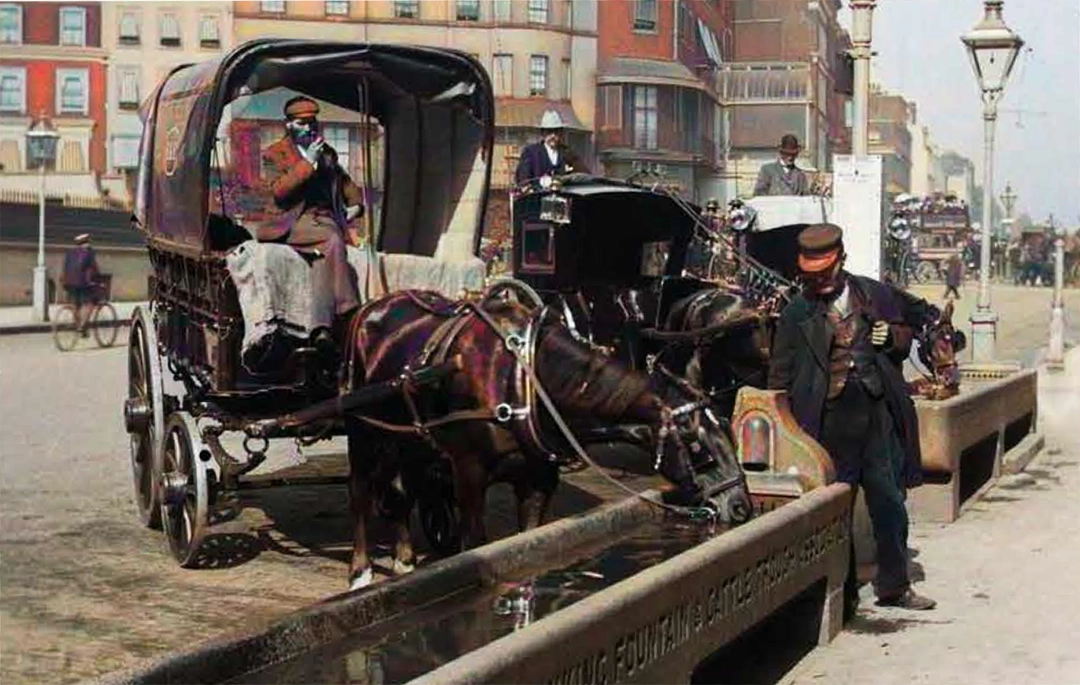
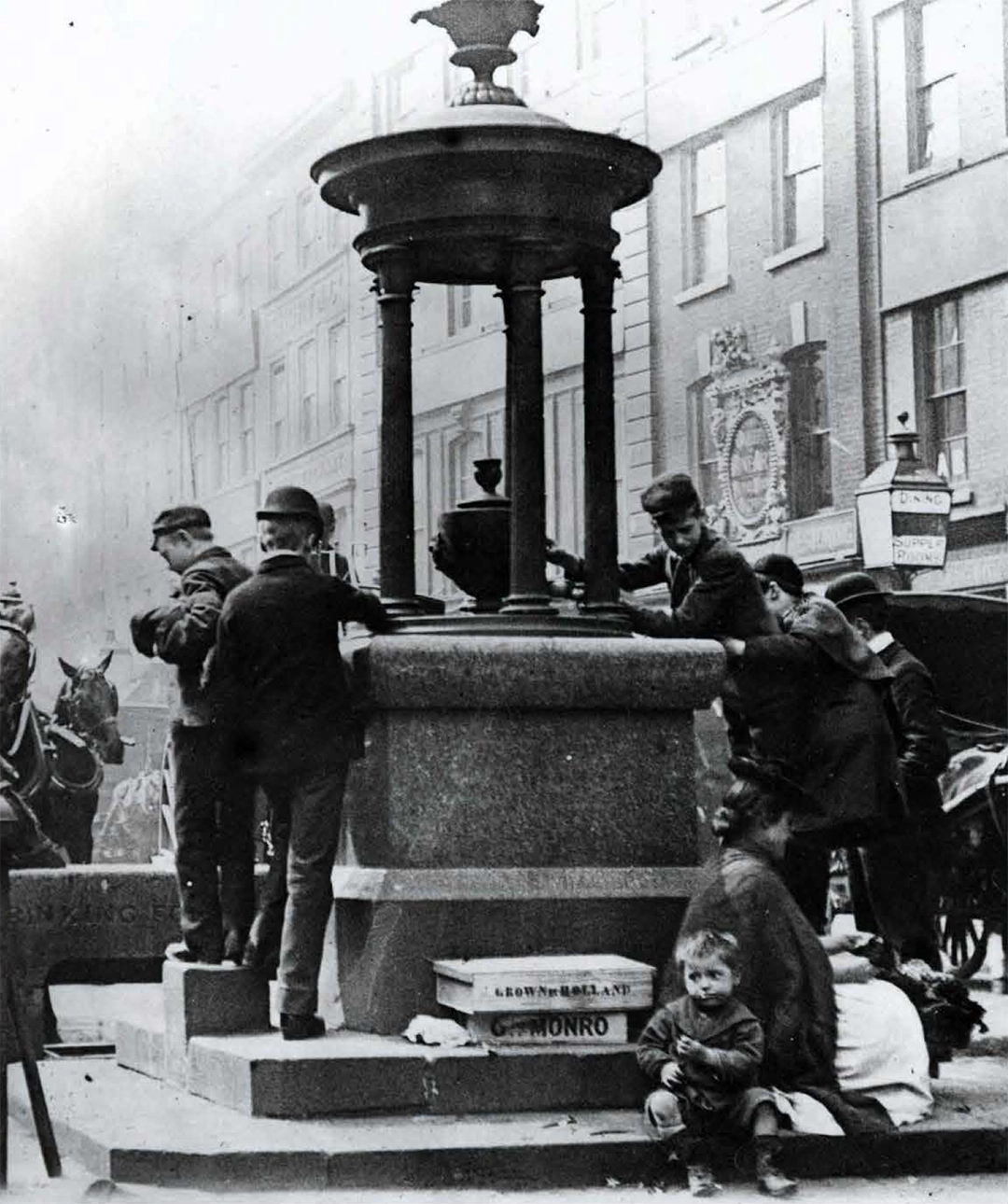
This photograph, among others, illustrates Kathryn Ferry’s article Water of Life for Who Do You Think You Are?, which explores the vital role public drinking fountains played in Victorian public health and social welfare.
This photograph set off my alarms at once. Not to the degree of a contemporary First World mother, of course, though enough for me to notice. Whenever I took Yoko—my dog—for a walk, I watched to make sure she never put anything in her mouth. Nothing. So I share, in moderation, the collective hysteria that has turned hygiene into a cult of asepsis.
The picture shows two boys drinking from a public fountain in London, in August 1937. It was taken on Clapham Common. Since the point hardly matters here, I shall preserve my ignorance about its author and provenance. It is summer. The day is hot. The boys are shirtless. The first unsettling detail is that each holds a metal cup chained to the stone. An embarrassed bronze lion lets an uncertain trickle of water fall from its encrusted jaws. It is a tranquil image. The water seems to be there for anyone who wishes to drink.
Stretching behind that scene lies an expensive century. By 1850 London had tripled its population and was drinking from a Thames turned into an open sewer. Cholera and typhus ravaged the poorer districts, while anyone without a private cistern depended on contaminated wells or on water vendors who, naturally enough, drew their supplies from the river itself. The cheapest alternative was beer. Taverns served as more or less reliable dispensaries, together with all the social consequences one would expect.
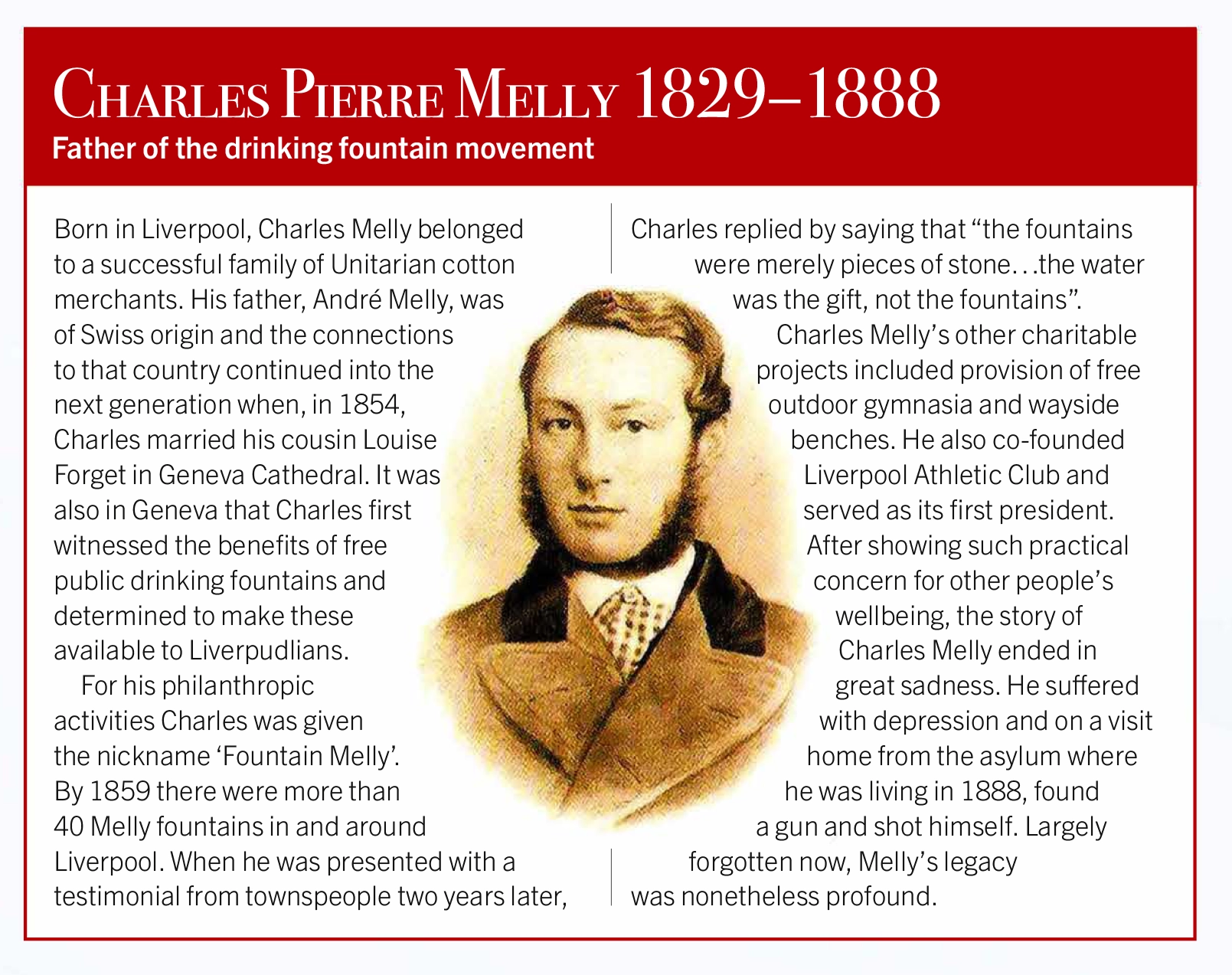
In 1854 the merchant Charles Melly installed a free drinking fountain on the Liverpool docks. He is said to have done so after being moved by emigrants who pleaded, through gestures alone, for a glass of water and could be offered nothing but the horses' trough. Five years later London inaugurated its own fountain in the wall of one of its churches. Five thousand people drank from it every day. By the end of the century the Metropolitan Drinking Fountain Association had erected five hundred fountains, and coachmen carried maps marking watering places for their horses.
The chained cup embodies the precise measure of restraint. Unlike the chained teaspoons once found at Havana's Coppelia ice cream parlour, this one cast no moral suspicion upon the thirsty. It simply declared that water would still be there for the next person. In that sense it was communal in the strictest meaning of the word. Every mouth in the city touched it—the dockworker, the child, the clerk—and nobody saw scandal in that. They saw civilization. Clean drinking water, freely available in the street, was a public-health achievement, a moral achievement, a political achievement. Thirst was never meant to carry a price tag.
A century and a half later, what has become of our relationship with water? Water is no longer enough. It must contain electrolytes. It must be alkaline. It must be infused with melon, cucumber or lemon. Sparkling water from volcanic springs. Premium water in designer bottles. Beyond these offerings, an older world quietly resurfaces—a pre-hydraulic world of untamed waters and urban thirst. Thirst still marks distinctions. My water is not your water. Careful.
I am drifting. Let me return.
Most modern mothers would look at this photograph and recoil. Cups teeming with microbes, coated in everyone's saliva. To drink from a common cup is to enter, hand in hand with bacteria, the anonymous, uncultivated crowd that drinks water for the crude purpose of quenching thirst. Disgusting.
My own bottle is made by Adidas. I did not buy it from an Adidas store. I found it at Ross. Even my water comes wrapped in branding and design, still sold in little plastic bottles. I know. I am as guilty as anyone.
It seems to me that we climbed the long slope separating us from the rest of the animal kingdom only to discover ourselves descending the other side. We once democratized access to water. Now we have placed it beyond the thirsty. We abandoned inexpensive antibodies in exchange for dubious ones that cost hundreds. These electrically charged waters of synthetic flavours and glacial fizz are not sinful in themselves. They simply reveal a culture that has forgotten its greatest achievements and reduced them to trivialities. The leap from the stream to the public fountain changed everything. It spared us countless hours spent on toilets, in bed, and doubled over with ruined stomachs. Now we devote intelligence and energy to reinventing needs that history had already settled. For someone like me, who has always had a weakness for decadence and ruin, this is excellent news.
That said, Yoko will go on drinking people's water—with electrolytes. And the children in Africa? Does anyone happen to have an address where I can mail them a fifty-cent bottle of water? I would rather do what almost all of us do. Think about happier things.
I love this photograph. Innocent in the way every photograph Facebook now serves us seems innocent. Compulsive sterilization has undoubtedly lengthened our lives. It has also scattered our reserves of vitality and our spontaneous bursts of joy. It has turned us into calorie detectives. All of that belongs to the First World, naturally. Back where I was born, we have already returned to polluted rivers and medieval buckets. Down here, at the bottom of the Third World, we wait for a snowstorm, a cloudburst—anything that might bring water back to the fountain.




In encounters with certain works of contemporary visual art, perception activates modes of association that situate aesthetic experience in territories where matter, gesture, and time intertwine. Elizabet Cerviño’s (Manzanillo, Cuba, 1986) exhibition The Rhythm of Resilience, recently presented at Gallery 114 in Ybor City, Florida, unfolds within this horizon.
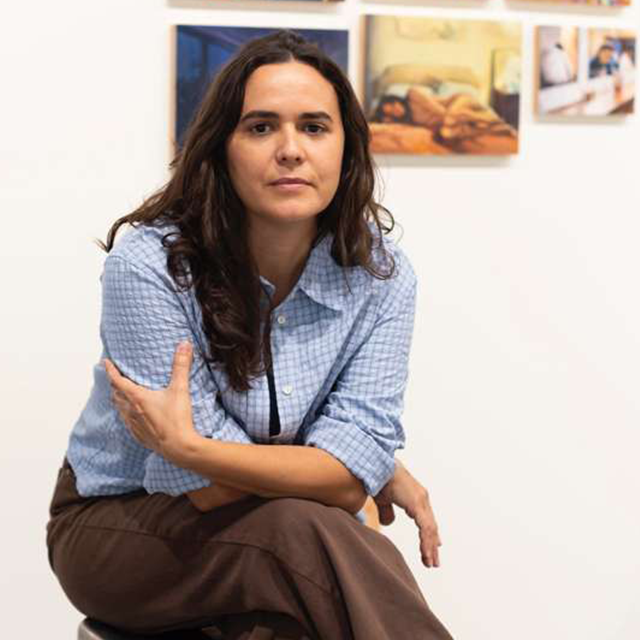
Evelyn Sosa and Leticia Sánchez Honored for Their Artistic Contributions

.svg)