1310 PENDLETON STREET CINCINNATI, OH
| (513) 407-7077 | WED - SAT 11:30 AM - 4:00 PM

THE
ANNEX
NEWS

On the occasion of her exhibition Catch Me Before I Fly Away at The Annex Gallery
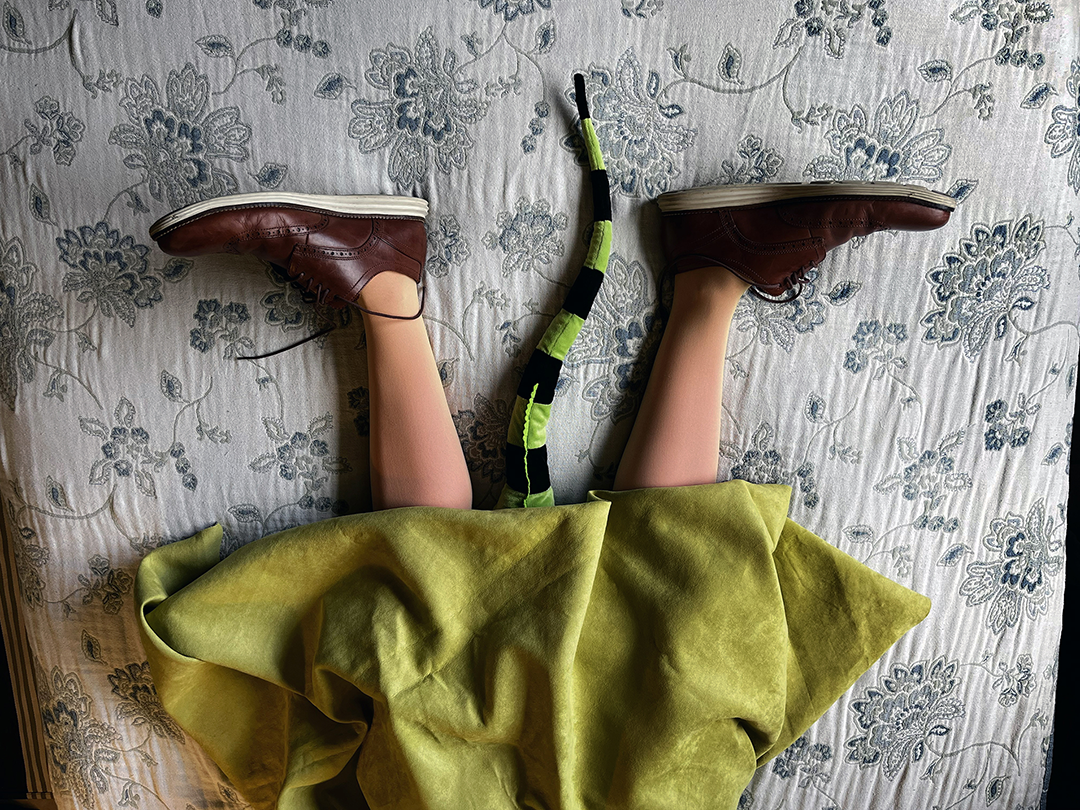
From the series Images and Actions Vitiated by Meaninglessness, Untitled
Ten years. A decade. That is how long it has taken me to write about Cirenaica Moreira’s work, about Cirenaica herself, about her visual universe. Today I discover that it is easier for me to write about her than about her work.
Even so, I would rather undertake the exercise of trying to understand what has happened between those endearing photographs shown in Havana some years ago and the exhibition we are opening now at The Annex. I would like to approach these images through their formal qualities, to follow a transversal, oblique path that might allow me to study the emotional structure that sustains them.
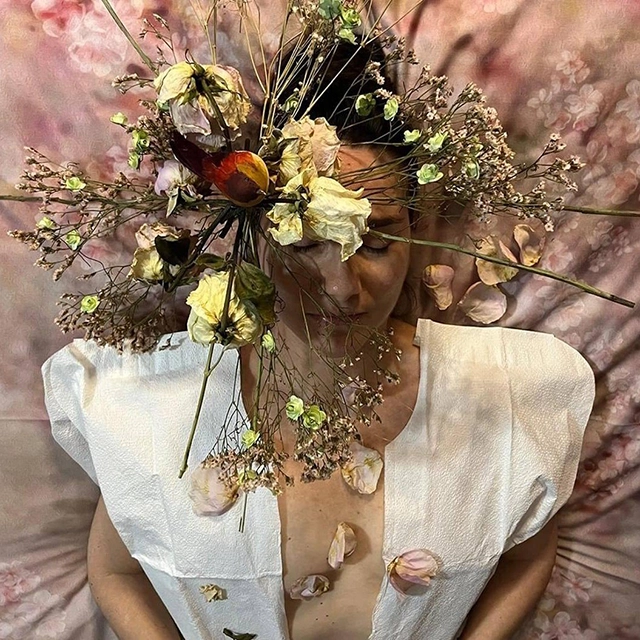
If I had to characterize them in two or three words, I would use the term “latent nature.” These strike me as a group of still lifes, seen from above, like a banquet for princes and sultans. The model—though I cannot tell whether she wants to be Cirenaica herself or not—occupies a center from which branches of her affective pulse flow outward, like tributaries from a river. All these images revolve around the “Cirenaica” experience. They are all interiors that keep her safe from the elements. Almost always lying down or reclining, she weaves her own shroud around herself and settles into the boat that will carry her to the next dimension, which, fortunately, is a gallery.
Although I do not think I am speaking here of art about gender, strictly speaking, the feminine is overwhelming. The strangeness lies in the way it appears as an almost decorative presence, essentially passive, offered up for contemplation. To read that representation, however, as an objection to the objectification of women would be an error, though the distinction between these two readings may not be obvious.
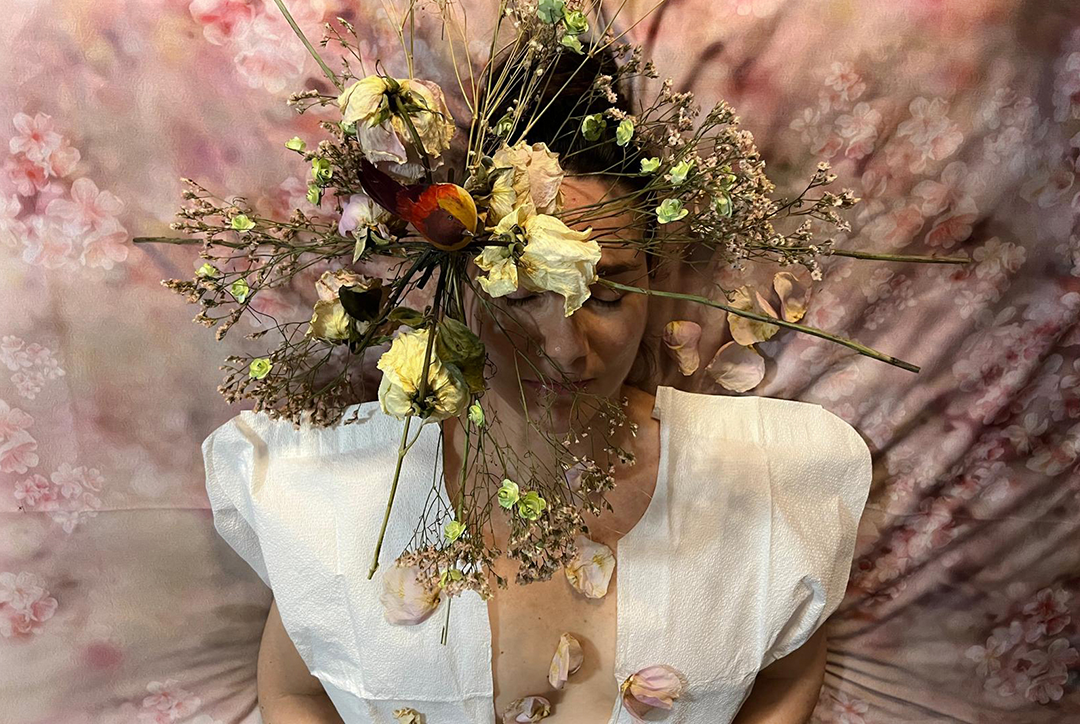
From the series Images and Actions Vitiated by Meaninglessness, Untitled
I want to see it as life incorporated into the landscape. In any case, as nature verging on still life, barely alive, nourished and flowering in its repose. Formally, the comparison is untenable, yet Charlotte Perkins Gilman’s The Yellow Wallpaper comes to mind, where an attentive gaze reveals an uncertain figure trapped within the pattern. And to close the circle, there are Francesca Woodman’s visions of a body trying to merge with, hide in, perhaps stand out from, the shadows of the inanimate.
Broadly speaking, we move through an organic world of flowers, fruit, delicious animal fragments, tails, feathers, and so on. All of it stolen from its natural habitat. Dried or artificial flowers, the quintessential symbols of the feminine, leave unresolved their promise of freshness or bloom. They have left scent and dampness behind. Yet the vegetal brings another reading with it. Metamorphosis as the only way out of being possessed. The myth of Daphne, transformed into a tree to escape Apollo’s lust. In Raíces (Roots), a 1943 self-portrait, Frida Kahlo appears as fertile substrate from which vigorous plants emerge. Cirenaica’s photographs would be the opposite.

From the series Images and Actions Vitiated by Meaninglessness, Untitled
In none of these pieces—selected by Cirenaica herself—does her face appear. She denies us her gaze and once again directs our attention to what suffering has left us with. It is important to note that Cuban art and Cuban artists suffer the same anxieties as art and artists everywhere, and that those anxieties alone are more than enough to give rise to every kind of artistic expression. But we also carry the experience of exile and belong to a community that has yet to make peace with the simple fact of being alive, with life as an end in itself, beyond ideology, religion, and the rest. A community that still survives and thrives on revenge. Its repose is a mental territory violently contested against an obscenely regulatory State, fanatical about control, one that monitors even its citizens’ aspirations.
We see so many adorable little details. The ribbon at the wrist, the knee-high stockings, the little wound on her knee, all strangely childlike, yet displayed on an adult body. Could this infantilization express a woman’s permanent condition, like something wrapped in gift paper?
For those far removed from Cuban art, Cirenaica Moreira’s direct lineage—she herself already a point of reference and departure—is inscribed in the use of the fragmented body as language. From Ana Mendieta to Marta María Pérez Bravo. On the international map, her work belongs to the current rereading of the feminist avant-garde of the seventies, alongside Birgit Jürgenssen, Louise Bourgeois, Woodman, and Hannah Wilke.
If anything is truly important, it is the modest means used to achieve these images, imposed by the precariousness of exile. Cell-phone cameras, inexpensive materials, purely domestic resources. With these she shares her tribulations.

From the series Images and Actions Vitiated by Meaninglessness, Untitled
The overhead view alludes to Instagram’s flat-lay grammar, a format closely associated with product or food photography, which she uses to portray her own body. This soft, pink, floral aesthetic may be read as decorative or, much worse, as cottagecore. That might be a risk with other artists. In her case, it is not. Cirenaica is the most gifted of the suicidal photographers. And there is no way she will end up at a dead end.¹
Note
¹ The final two sentences invert the refrain of “Conductores suicidas” (“Suicidal Drivers”), by Joaquín Sabina, from the album Física y química (1992). The song portrays a friend with a style all his own and talent to spare, who is consumed by drugs, debt, and hospitals. Its refrain asks him, somewhere between admiration and reproach, how the most gifted of those daredevils let himself be carried off to a dead end. Here, the question becomes an assertion. Cirenaica shares the style and temerity of that figure, but no precarity will manage to corner her.






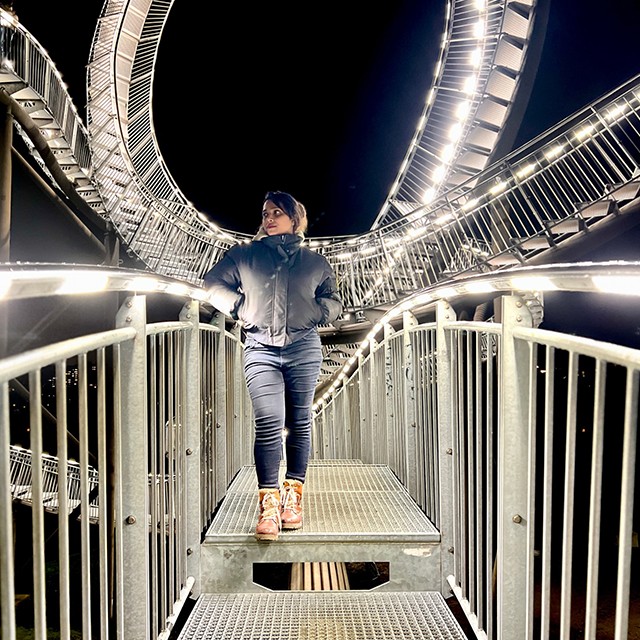
In its October 19, 2026 edition, The Christian Science Monitor Weekly devotes a double-page spread to an interactive sculptural installation. I mention it for its photograph, which is hardly anything special in itself, though it has something striking about it. The contrast between the abyssal blue of the background and the gentle lines of light is lovely.
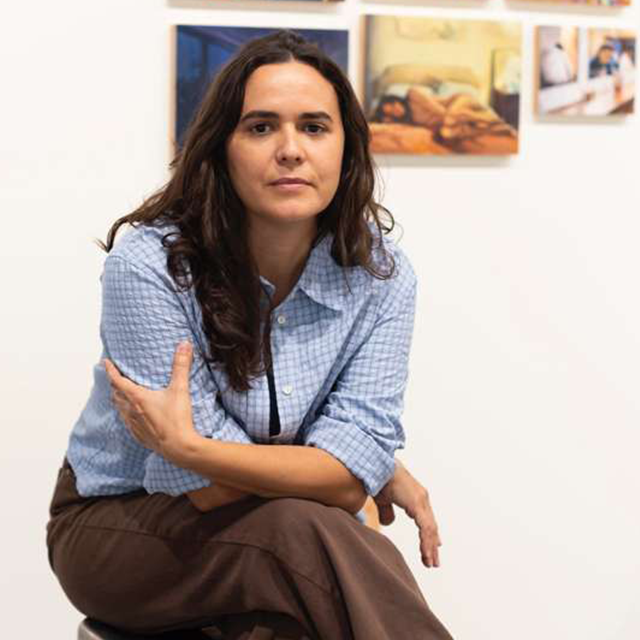
Evelyn Sosa and Leticia Sánchez Honored for Their Artistic Contributions